Fallow Deer
The fallow deer is one of the most beautiful and widely distributed exotic big-game animals in the United States, prized for the broad, palmated antlers of mature bucks and for its excellent meat.
🗓️ Last reviewed: June 2026
Overview
The fallow deer is one of the most beautiful and widely distributed exotic big-game animals in the United States, prized for the broad, palmated antlers of mature bucks and for its excellent meat. Native to the Mediterranean region and long established across Europe, fallow deer were introduced to American ranches and parks generations ago and now live as free-range and managed herds in Texas, California, and other parts of the country. They are a wonderful exotic for a wide range of hunters: handsome, gregarious, vocal during the rut, and available across a spread of colors and antler styles. Whether glassed on open Hill Country pastures or stalked along wooded edges, a mature fallow buck with its distinctive shovel-shaped antlers is a striking and attainable trophy.
Identification & Appearance
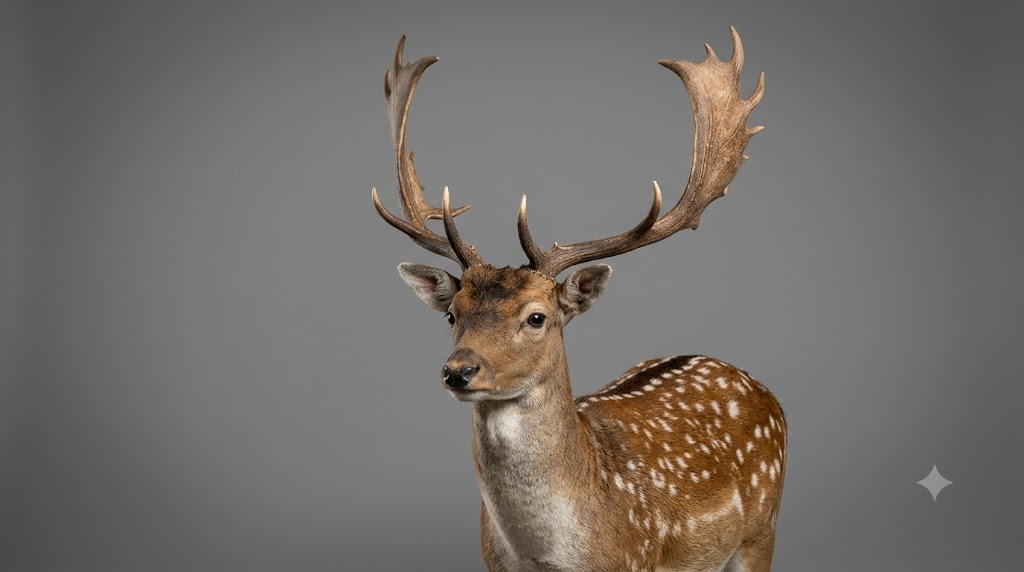
Fallow deer are mid-sized, graceful deer best known for their variable coat colors and the broad, flattened antlers of the bucks. The classic coloration is a rich tan with bright white spots and a dark dorsal stripe in summer, fading to grayish in winter, but fallow also occur in white, menil (pale and always spotted), and dark chocolate to nearly black forms. They carry a distinctive black-and-white tail and rump patch that flags conspicuously when alarmed. Bucks are larger than does, with mature bucks typically weighing in the rough range of 130 to 200 pounds. The signature feature is the antlers of an adult buck: tall beams that flare into broad, palmated "shovels" with points along the trailing edge, unlike the tined racks of native deer. Does and young are antlerless and slighter in build.
Range & Habitat (US)
In the United States, free-ranging and ranch-managed fallow deer are most numerous across the Texas Hill Country and South Texas, with notable free-ranging herds in parts of California, the Southeast, and other regions where escapees and introductions took hold. Fallow deer favor a mix of open grassland and woodland - parkland-style country where they can graze in the open yet retreat to the shade and security of trees and brush. They adapt well to ranch pastures, oak savanna, and rolling mixed terrain, and they are more tolerant of open ground than many deer. The common requirement is a blend of grazing, browse, water, and nearby cover, which the Hill Country and similar landscapes supply in abundance.
Behavior & Sign
Fallow deer are social animals that often gather in sizable herds, with does and young in one group and bucks frequently in separate bachelor groups outside the rut. They are most active in the cooler hours of morning and evening and are generally more tolerant and visible than wary species like sambar, though hunting pressure makes them warier. The rut is a spectacle: mature bucks establish stands or rutting grounds and give a deep, repetitive groaning call, while thrashing brush and working the ground. Sign includes spotted patterns of tracks where herds cross, well-grazed pastures, droppings, rubs on saplings, and, during the rut, churned-up rutting stands and the unmistakable groaning of bucks. Their gregarious nature means finding one fallow deer often means finding many.
Hunting Seasons & Timing
As a non-native exotic on Texas private land, fallow deer generally may be hunted year-round with a valid Texas hunting license and landowner permission, with no fixed state season; rules vary in other states where free-ranging herds exist, so local regulations must be checked. The standout time to hunt mature bucks is the autumn rut, when bucks are vocal, bold, and concentrated on their rutting grounds, making them easier to locate and pattern. Cooler fall and winter conditions also improve animal condition and meat care and bring better daylight movement. Outside the rut, fallow can be hunted over feeding areas and travel routes throughout the year. Always confirm current license requirements and any state-specific season or tag rules for free-ranging populations before hunting.
Hunting Methods
Spot-and-stalk and ambush hunting both work well for fallow deer thanks to their use of open and semi-open country. Glassing pastures, savanna, and woodland edges at first and last light to locate a herd, then planning a careful stalk, is a productive and engaging method. During the rut, hunting near a buck's rutting ground - where his groaning gives him away - can be especially effective from a blind or a quiet approach. Sitting over feeding areas, water, or travel corridors accounts for many fallow as well. Because the deer are gregarious and have many eyes in a herd, a patient, low-profile approach with attention to the wind is key to closing the distance on a mature buck.
Where to Find Them - Reading the Terrain
Look for the parkland mix of open grazing and nearby cover that fallow favor. Glass open pastures, savanna, and the grassy edges of woodlands at dawn and dusk, where herds feed in the open before retreating to shade. Trails between bedding cover and feeding areas, water sources, and well-grazed flats all concentrate movement. During the rut, listen for groaning bucks and look for their thrashed rutting stands, which mark exactly where a mature buck will be. Spotted tracks where herds cross trails, droppings, and saplings rubbed by bucks help confirm an area is being used. As always, position so the wind carries your scent away from where you expect the deer, and use the cover and terrain to approach unseen by the herd's many eyes.
Gear & Optics Needed
A good binocular - an 8x42 or 10x42 - is the cornerstone for picking herds out of open and edge country and for judging the palmated antlers of bucks. A rangefinder removes guesswork on distance, which can stretch in open pastures. Fallow are mid-sized deer, so a standard deer rifle in the .243 to .30 caliber class with a quality bullet is entirely adequate; archers also take fallow successfully from blinds and on stalks. Quiet, weather-appropriate clothing, sturdy boots for varied terrain, and shooting sticks or a bipod for a steady rest round out the essentials. Add a sharp knife, a good pack, and a plan to cool the meat promptly, particularly during warm-weather hunts in southern ranch country.
Shot Placement & Field-Dressing
Ethical, fair-chase hunting calls for a clean, quick harvest. The broadside shot to the heart-lung area - low and just behind the front shoulder - gives the largest margin for error on a mid-sized deer like the fallow. Wait for a calm, unobstructed, well-ranged opportunity, be mindful of other animals in the herd behind your target, and pass marginal shots. After the shot, give the animal a moment, then track carefully. Field-dressing promptly preserves meat quality: cool the carcass quickly, keep the body cavity clean, and skin and quarter the animal as conditions allow. Wear gloves, work cleanly, and follow your state's regulations on carcass transport and any disease testing requirements.
Meat & Eating Quality
Fallow venison is widely considered among the very best wild meats - fine-grained, tender, lean, and notably mild, with little of the strong flavor some associate with deer. As with all game, eating quality hinges on field care: quick cooling, clean handling, and proper aging make the difference. The loin and backstrap are superb for quick, high-heat cooking, the hindquarters roast and braise beautifully, and trimmings grind into excellent burger and sausage. A fallow buck or doe provides a generous amount of premium table fare, and the species' reputation for delicious meat makes it a favorite of hunters who hunt as much for the freezer as for the trophy.
Common Mistakes
A common mistake with fallow is forgetting how many eyes a herd has; hunters who try to stalk a group without using cover and wind get picked off quickly by an alert doe. Misjudging distance in open pastures leads to poor shots, so a rangefinder and steady rest matter. During the rut, hunters sometimes bump bucks off their rutting grounds by approaching carelessly rather than setting up and letting a groaning buck reveal himself. Other errors include neglecting the wind, taking shots into a bunched herd where another animal could be hit, and underestimating warm-weather meat care in southern ranch country. Patience, a low profile, and clean shot selection consistently outperform haste.
Regulations & Conservation Note
As a non-native exotic, fallow deer in Texas are managed under private-land authority rather than a fixed state season, while some other states regulate free-ranging fallow under their own rules. On ranches, the value placed on fallow deer supports habitat improvement and broader wildlife stewardship, and managed hunting helps keep herds in balance with available forage. Responsible hunters apply fair-chase ethics, take only clean shots, fully use the meat, and follow all license requirements and any carcass-movement or disease regulations in effect. Hunting fallow legally and ethically keeps both ranch herds and free-ranging populations healthy and the habitats that support them productive.
Best Suited For
Fallow deer suit a broad range of hunters, from newer big-game hunters to seasoned trophy seekers, thanks to their availability, manageable size, and stunning palmated antlers. They are an excellent choice for hunters who enjoy glassing open and edge country and making measured stalks, and the vocal autumn rut makes them especially engaging and approachable. Archers and rifle hunters alike do well on fallow. Hunters who value outstanding meat will find them hard to beat. They are less of a fit for those seeking a deep-cover, ultra-wary challenge, but for an attainable, beautiful exotic with first-class table fare, the fallow deer is an ideal target.
FAQ
Do I need a special license to hunt fallow deer? On private land in Texas, fallow deer are an exotic hunted with a valid Texas hunting license and landowner permission, with no fixed state season. Other states with free-ranging herds may have their own rules, so always confirm local requirements before hunting.
When is the best time to hunt fallow deer? The autumn rut is the standout window, when mature bucks are vocal, bold, and concentrated on their rutting grounds. Cooler fall and winter conditions also improve daylight movement and meat care.
What makes fallow bucks distinctive? Mature fallow bucks carry broad, flattened, palmated antlers - shovel-shaped beams with points along the trailing edge - quite unlike the tined racks of native deer. They also come in several coat colors, from spotted tan to white to nearly black.
Is fallow venison good to eat? Yes - it is regarded as some of the finest wild meat available, fine-grained, tender, lean, and mild. As always, fast cooling and clean field care make the biggest difference.
What rifle is suitable for fallow deer? A standard deer cartridge in roughly the .243 to .30 caliber class with a quality bullet is entirely adequate for these mid-sized deer; many hunters also take fallow successfully with archery gear.