Gemsbok
The gemsbok is a magnificent African oryx that has established free-ranging herds in the American Southwest, most famously across the desert grasslands of New Mexico, making it one of the most unusual and coveted big-game animals a hunter can pursue in the United States.
🗓️ Last reviewed: June 2026
Overview
The gemsbok is a magnificent African oryx that has established free-ranging herds in the American Southwest, most famously across the desert grasslands of New Mexico, making it one of the most unusual and coveted big-game animals a hunter can pursue in the United States. Introduced to New Mexico's White Sands region in the late 1960s and 1970s, gemsbok thrived in the arid country and spread, creating a genuine free-range population that is now hunted through a limited public draw as well as on private and ranch land in Texas and elsewhere. A striking, powerfully built antelope with long rapier horns and bold facial markings, the gemsbok offers a demanding desert hunt, superb meat, and a trophy unlike anything native to North America. For the hunter seeking something truly distinctive, the gemsbok is a prize.
Identification & Appearance
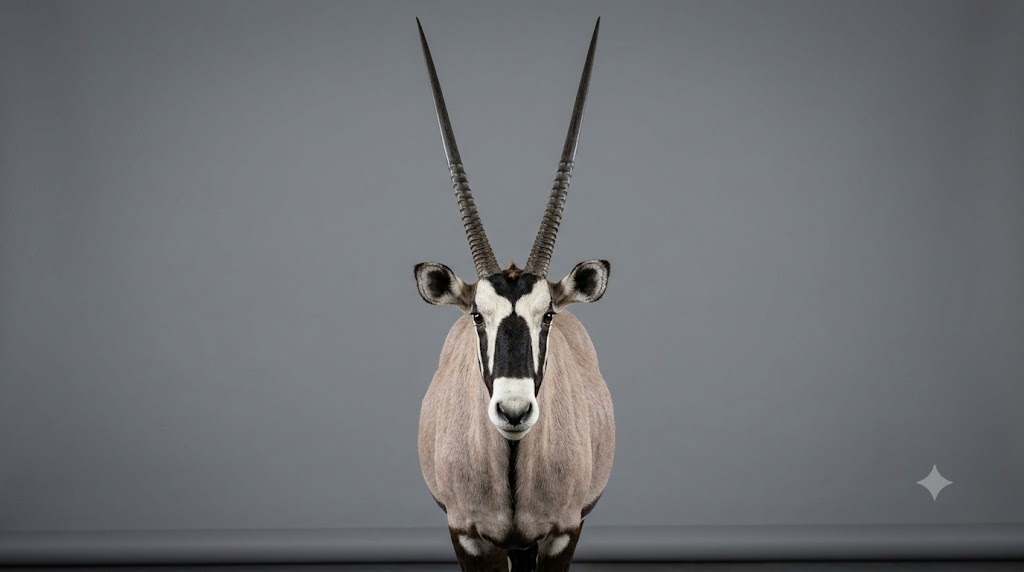
The gemsbok is a large, robust antelope with a horse-like build and unmistakable markings. The body is a pale fawn-gray, set off by a bold black-and-white face mask, black flank stripes, black leg markings, and a long black-tufted tail. Both bulls and cows carry the species' famous horns: long, straight, sharply pointed and ringed at the base, sweeping back in a slight curve and capable of reaching impressive lengths. Telling bulls from cows is tricky because both sexes are horned - cows' horns are often longer and more slender, while bulls' tend to be heavier and thicker at the base, and bulls are generally more massively built. Gemsbok are heavy animals, with mature adults commonly weighing several hundred pounds. Their powerful build, desert coloration, and rapier horns make them a dramatic and challenging target.
Range & Habitat (US)
In the United States, free-ranging gemsbok are centered in south-central New Mexico, particularly in and around the Tularosa Basin and the White Sands Missile Range area, where they roam open desert grassland, creosote flats, and arid basin-and-range country. They are also found on private and high-fence ranches in West Texas and parts of the Southwest. Gemsbok are exquisitely adapted to hot, dry environments and can persist with very little water, ranging widely across open desert where they can see and run. They favor the same kind of wide-open, long-sightline country that suits other open-country antelope, using their eyes and endurance rather than cover to avoid danger. This desert adaptation is exactly what allowed them to flourish in the New Mexico landscape.
Behavior & Sign
Gemsbok are hardy, wide-ranging desert animals with excellent eyesight and great endurance, well suited to evading hunters across open country. They form herds of varying size, often with cows, calves, and younger animals together, while older bulls may be solitary or run in small groups. They are most active in the cooler hours and can cover enormous distances in search of forage. A cornered or wounded gemsbok is genuinely dangerous, capable of using its long, sharp horns to defend itself, so they must be approached with respect. Sign across the desert includes large tracks on dusty flats and trails, droppings, and heavily used routes to scarce forage and water. As with other open-country species, locating gemsbok is largely a matter of glassing vast terrain and spotting animals at distance.
Hunting Seasons & Timing
In New Mexico, free-ranging gemsbok are managed as a game animal and hunted through a limited, draw-based public season with a set number of permits, including special hunts on and around the missile range - this is a regulated, tag-allocated opportunity rather than a year-round hunt. On private and high-fence ranches in Texas and elsewhere, gemsbok are an exotic that may generally be hunted year-round with a valid hunting license and landowner permission. The cooler months from fall into winter are the most comfortable and practical for these demanding desert hunts, easing both long stalks and the care of a large carcass in a hot climate. Always confirm the specific season, draw, and permit rules for New Mexico, or the license and access requirements for private-land hunts, well before you go.
Hunting Methods
Spot-and-stalk across open desert is the defining method for gemsbok and a physically demanding one. Hunters glass vast stretches of desert grassland and basin country from high points or while covering ground by vehicle and foot, locate a herd or a lone bull, then plan a long stalk that uses subtle terrain and the wind to close the distance on a sharp-eyed, far-ranging animal. Shots are often at extended range in the open, placing a premium on marksmanship, a steady rest, and a flat-shooting rifle. Because gemsbok are large, tough, and potentially dangerous when wounded, hunters should bring adequate firepower and be prepared for follow-up shots, and should approach downed animals with great caution. Patience, fitness, and disciplined shooting are essential.
Where to Find Them - Reading the Terrain
Glass the wide-open desert: grassland flats, creosote and basin country, and the long sightlines where gemsbok feed and travel. Look from elevated vantage points at first and last light, scanning for the pale bodies and dark facial markings of animals against the desert. Heavily used trails, large tracks on dusty ground, droppings, and routes toward scarce forage and water concentrate movement in this sparse country. Because gemsbok range so widely, expect to cover and glass a lot of ground to locate them. Once you find animals, use what little terrain relief and vegetation exist to plan a stalk, keep the wind in your favor, and be ready for the long final approach across open desert that defines this hunt.
Gear & Optics Needed
Gemsbok hunting is an open-desert, glassing-intensive pursuit over big country, so top-tier optics are essential. A quality 10x42 binocular and a spotting scope let you locate animals and judge horns across vast distances, and a reliable rangefinder is critical for the long shots common in the open. Bring a flat-shooting, hard-hitting rifle - cartridges in the .270 to .30 caliber class or larger with tough, deep-penetrating bullets suit a heavy, durable animal that may be shot far off. A steady rest such as a bipod or shooting sticks is vital. Add rugged boots for desert terrain, plenty of water and sun protection, and a solid plan for quartering and cooling several hundred pounds of meat quickly in a hot, dry climate. Practice at realistic long ranges before the hunt.
Shot Placement & Field-Dressing
A clean, ethical harvest on such a large, tough, and potentially dangerous animal depends on precise shot placement and adequate power. The broadside shot to the heart-lung area, tight behind the front shoulder and into the lower third of the chest, offers the best margin, and many hunters favor breaking the shoulder to anchor a heavy bull that might otherwise run far in open country. Wait for a calm, well-ranged, unobstructed shot from a steady rest, and be ready to follow up. Approach a downed gemsbok with extreme caution and from behind, as the horns are formidable. Field care is demanding in the desert heat: a mature gemsbok yields a great deal of meat that must be skinned, quartered, and cooled fast. Work cleanly and follow all carcass and disease rules.
Meat & Eating Quality
Gemsbok venison is exceptional - lean, fine-grained, mild, and often ranked among the very best wild meats, prized by those fortunate enough to take one. As with all game, eating quality depends heavily on field care, and the desert heat makes rapid cooling and clean handling especially important. The tender loin and backstrap excel with quick, high-heat cooking, while the large hindquarter muscles roast, braise, or grind superbly, and the sheer size of the animal yields an abundance of premium red meat. For meat hunters, a gemsbok provides both a remarkable trophy and a generous supply of outstanding table fare, fully rewarding the effort of a hard desert hunt.
Common Mistakes
The most common mistake with gemsbok is underestimating the distances and the terrain - hunters who are not prepared to glass huge country, cover ground on foot, and shoot accurately at long range often go home empty. Bringing too light a rifle on such a large, tough animal leads to lost game, as does misjudging distance in the deceptive open desert without a rangefinder. Failing to get a steady rest for the long shots is another frequent error. Hunters also sometimes approach downed or wounded gemsbok carelessly, risking injury from the dangerous horns. Finally, neglecting to plan for the heat and the mass of meat can spoil a hard-won harvest. Fitness, marksmanship, adequate gear, and caution are all essential.
Regulations & Conservation Note
Gemsbok occupy an unusual place in American wildlife management: in New Mexico they are managed as a game animal with a regulated, limited draw and set permit numbers - including the well-known White Sands hunts - to keep the free-ranging herd in balance with the desert habitat, while on Texas and other private ranches they are hunted as an exotic under landowner authority. In both cases regulated hunting funds and supports wildlife management and habitat stewardship. Responsible hunters apply fair-chase ethics, take only clean shots with adequate equipment, fully use the meat, and follow all draw, permit, license, and carcass-movement rules. Hunting gemsbok legally and ethically helps keep this remarkable free-ranging population healthy and the arid lands that hold it well managed.
Best Suited For
The gemsbok suits the fit, experienced hunter who relishes a demanding spot-and-stalk hunt across vast open desert and who shoots well at long range with an adequate rifle. It rewards endurance, careful glassing, disciplined marksmanship, and respect for a powerful, potentially dangerous animal, and it offers a truly unique free-range trophy and outstanding meat. Hunters who enjoy big country, long stalks, and a physical challenge will find the gemsbok deeply rewarding, and the New Mexico draw makes a legendary public-land opportunity for those willing to apply. It is less suited to beginners or to those seeking an easy, short, or close-cover hunt, but for a hardy hunter chasing something extraordinary, the gemsbok stands alone.
FAQ
Do I need a special permit to hunt gemsbok? In New Mexico, free-ranging gemsbok are hunted through a limited, draw-based public season with set permits, including special White Sands hunts. On private ranches in Texas and elsewhere, they are an exotic hunted with a valid license and landowner permission. Always confirm the specific rules for where you plan to hunt.
Why are gemsbok challenging to hunt? Gemsbok live in vast open desert, have excellent eyesight and great endurance, and range widely, so locating and approaching them demands fitness, thorough glassing, and accurate long-range shooting. They are also large, tough, and dangerous when wounded.
When is the best time to hunt gemsbok? The cooler months from fall into winter are most practical, easing long desert stalks and the care of a large carcass in the heat. In New Mexico, the available hunt dates are set by the draw and permit system.
Is gemsbok meat good to eat? Yes - it is lean, fine-grained, mild, and often ranked among the finest wild meats, and a single animal yields a large amount. Fast cooling and clean handling in the desert heat are essential.
What rifle should I bring for gemsbok? A flat-shooting, hard-hitting cartridge in roughly the .270 to .30 caliber class or larger, paired with a tough, deep-penetrating bullet and a steady rest, is well suited to such a large, durable animal often shot at long range.