Greater Kudu
The greater kudu is one of Africa's most beautiful spiral-horned antelope, and it has become a common and sought-after exotic on the hunting ranches of Texas, where it now thrives in the brushy Hill Country and South Texas thornscrub.
🗓️ Last reviewed: June 2026
Overview
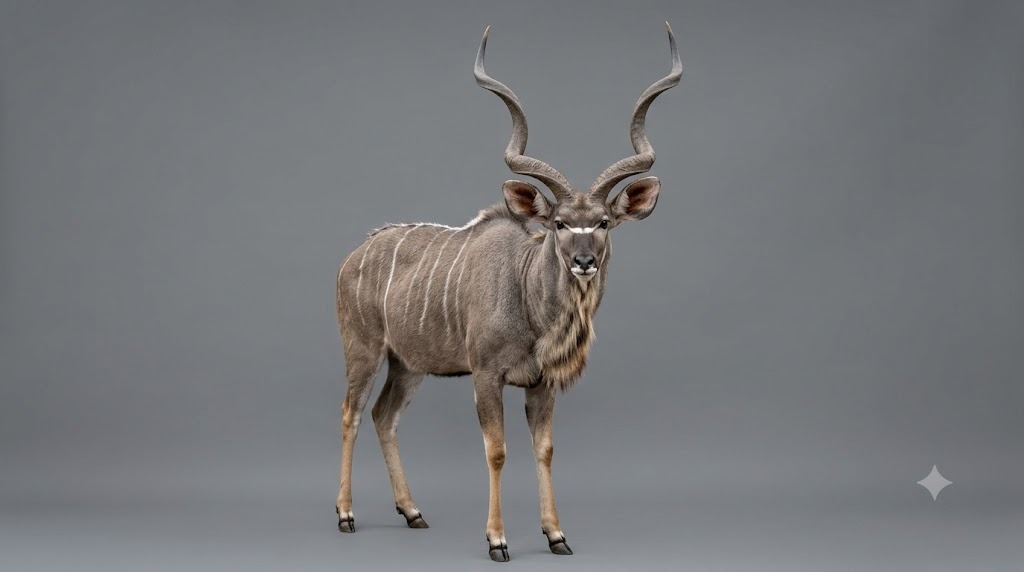
The greater kudu is one of Africa's most beautiful spiral-horned antelope, and it has become a common and sought-after exotic on the hunting ranches of Texas, where it now thrives in the brushy Hill Country and South Texas thornscrub. A tall, elegant animal with a soft gray-brown coat marked by thin white body stripes and a flowing throat fringe, the kudu carries some of the most spectacular horns of any game animal: long, sweeping corkscrew spirals that make a mature bull a true trophy. Imported and bred on Texas exotic ranches over the years, kudu have adapted well to the warm, cover-rich country and now offer hunters a year-round, no-draw opportunity at a genuinely majestic animal. Famously shy and quick to vanish into thick brush, the kudu has earned its nickname, the "grey ghost," and a free-range spot-and-stalk hunt for one is a rewarding and challenging pursuit, with fine eating meat as a bonus.
Identification & Appearance
The greater kudu is a large, strikingly graceful antelope with a tall, narrow build and a coat of soft gray-brown, crossed by six to ten thin vertical white stripes along the body. Bulls are larger and darker than cows, often with a bluish-gray cast, a prominent fringe of hair running down the throat and chest, a short mane along the spine, and a white chevron between the eyes. The unmistakable feature is the bull's horns: long, smooth, and twisted into wide corkscrew spirals that can reach impressive lengths, typically making two and a half graceful turns on a mature animal. Cows are smaller, lighter in color, and have no horns at all, which makes telling the sexes apart straightforward. Both have large, rounded ears and a white-tipped tail. Mature bulls are heavy, standing tall at the shoulder and weighing several hundred pounds, and their combination of size, coloration, and magnificent horns makes a trophy bull a dramatic and rewarding target.
Range & Habitat (US)
In the United States, greater kudu are an introduced exotic found almost entirely on private ranches in Texas, with strongholds across the Edwards Plateau Hill Country and the dense brush of South Texas, as well as scattered ranches elsewhere in the Southwest. They favor exactly the kind of country these regions offer: thick brush, wooded draws, oak and juniper cover, and thornscrub broken by openings, where they can browse and slip out of sight at the first hint of danger. Kudu are browsers rather than grazers, feeding on leaves, shoots, and woody plants, so cover-rich, brushy terrain that supplies both food and concealment suits them perfectly. Many Texas ranches that hold kudu are large, free-range, low-fence properties where the animals move and behave naturally across big country. This preference for thick, broken cover is central to how the species is hunted and is exactly what makes a kudu so hard to spot.
Behavior & Sign
Greater kudu are shy, alert, and famously elusive, earning the nickname "grey ghost" for their ability to stand motionless in brush and then melt away unseen. They have excellent hearing and a keen sense of smell, and they rely on cover and stillness rather than open-country flight to avoid danger, often freezing or quietly slipping into the thick stuff long before a hunter knows they are there. Cows and young typically move in small groups, while mature bulls are often solitary or run in bachelor groups, especially outside the breeding period. Kudu are most active in the cooler hours of morning and evening, browsing along the edges of brush and openings. Sign includes their tracks along trails and at water, droppings, and browse lines on shrubs and low trees. A startled bull may give a loud bark and bound away with its head laid back and a flash of the white tail, then disappear into cover. Reading this sign and knowing where they feed and travel is key to locating them in thick country.
Hunting Seasons & Timing
Because greater kudu are an introduced exotic on private land in Texas, they may generally be hunted year-round with a valid Texas hunting license and the landowner's permission - there is no draw, no closed season, and no tag allocation as there would be for native game. This open, no-draw status makes kudu accessible whenever a hunter and a ranch can arrange it. That said, the cooler months from fall into winter are often the most comfortable and practical, easing long stalks through brush and making it far easier to care for a large carcass without the punishing Texas heat. Cooler weather also tends to keep animals moving and feeding more during legal shooting light. Always confirm the specific ranch's rules, pricing, and access requirements ahead of time, and make sure you hold a current Texas hunting license before you hunt.
Hunting Methods
Free-range spot-and-stalk in thick cover is the classic and most rewarding way to hunt greater kudu, and it is a genuine challenge against a wary, well-camouflaged animal. Hunters work slowly through brushy country and along the edges of openings, glassing carefully into shadow and cover for the horizontal lines of a body, the curve of a horn, or the flick of an ear, since a standing kudu can be nearly invisible. Early morning and late evening, when kudu browse along edges, are the prime times to catch one in the open or moving. Once a bull is located, the stalk demands patience, quiet movement, and constant attention to the wind, because the kudu's nose and ears are superb and a single mistake sends the "grey ghost" vanishing into the brush. Some ranches also glass from vantage points overlooking feeding areas and waterholes at first and last light. Shots in this thick country are often at short to moderate range, so quick, accurate shooting from field positions matters more than long-range marksmanship.
Where to Find Them - Reading the Terrain
Hunt the brush and its edges: wooded draws, oak and juniper thickets, thornscrub, and the openings and senderos cut through heavy cover where kudu browse and travel. Glass slowly and carefully into the shadows and the brush itself, not just the open ground, looking for the pale body stripes, the curve of a horn, or the big ears of an animal standing motionless. Browse lines on shrubs and low trees, tracks along trails and at water, and droppings all mark where kudu are feeding and moving. Concentrate your effort at first and last light along the edges between cover and openings, where shy animals are most likely to show. Because kudu rely on cover, expect to work into the wind, move slowly, and pick the brush apart with your eyes. When you locate a bull, use the terrain and vegetation to screen your approach and close the distance quietly for a clean, makeable shot.
Gear & Optics Needed
Hunting kudu in Texas brush is a close-to-moderate-range, cover-rich pursuit, so gear that helps you find animals in thick stuff and shoot quickly from field positions matters most. A quality binocular in the 8x42 or 10x42 range is ideal for picking apart shadows and brush, and a rangefinder helps in the more open senderos and feeding areas. A flat-shooting, hard-hitting rifle in roughly the .270 to .30 caliber class, loaded with a tough, well-constructed bullet, is well suited to a large, heavy-bodied antelope; many hunters favor a .30-06, .308, or similar. Bring shooting sticks or a bipod for a steady rest from field positions, since shots in brush often come standing or kneeling. Add comfortable, quiet clothing in earth tones, sturdy boots for brushy terrain, plenty of water and sun protection, and a solid plan for quartering and cooling a large carcass quickly in the warm climate. Practice quick, accurate shots from realistic field positions before the hunt.
Shot Placement & Field-Dressing
A clean, ethical harvest on a large animal like a kudu depends on sound shot placement and adequate power. The broadside shot to the heart-lung area, tight behind the front shoulder and into the lower third of the chest, offers the best margin, and breaking the shoulder helps anchor a heavy bull that might otherwise run into thick brush where recovery is harder. Wait for a calm, unobstructed shot from a steady rest, be sure of what is behind your target in cover, and be ready to follow up. After the shot, give the animal time, then follow up carefully, watching for sign. Field care matters in the warm Texas climate: a mature kudu yields a great deal of meat that must be skinned, quartered, and cooled as quickly as possible. Work cleanly, keep the meat free of dirt and hair, get it on ice promptly, and follow all carcass-handling and disease rules. Many hunters taking a trophy bull will also want to care for the cape and horns properly for a mount, so plan ahead with the ranch or a taxidermist.
Meat & Eating Quality
Kudu venison is excellent - lean, tender, fine-grained, and mild, and it is widely regarded as some of the best eating among the spiral-horned antelope. As with all game, eating quality depends heavily on field care, and the warm climate makes rapid cooling and clean handling especially important to protect the meat. The tender loin and backstrap are superb with quick, high-heat cooking, while the large hindquarter muscles roast, braise, or grind beautifully, and the sheer size of a mature bull yields an abundance of fine red meat. Many hunters consider kudu among the most rewarding exotics for the table as well as the wall. For the meat hunter, a kudu provides both a magnificent trophy and a generous supply of premium venison, fully rewarding the effort of a careful brush-country stalk.
Common Mistakes
The most common mistake with kudu is hunting too fast and looking only at open ground - hunters who hurry through the brush and fail to glass carefully into cover walk right past motionless "grey ghosts" without ever seeing them. Ignoring the wind is another frequent and costly error, since the kudu's keen nose will bust a careless stalk long before a shot is possible. Hunters also sometimes underestimate the animal's size and toughness and bring too light a rifle or bullet, leading to lost game in thick country. Taking a hurried or obstructed shot in brush, without a clear path to the vitals or a steady rest, causes wounded animals and difficult recoveries. Finally, neglecting to plan for the warm climate and the large amount of meat can spoil a hard-won harvest. Patience, careful glassing, wind discipline, adequate gear, and clean shooting are all essential.
Regulations & Conservation Note
Greater kudu in the United States are an introduced exotic held and managed on private ranches, chiefly in Texas, where they are hunted under landowner authority rather than through state game seasons, draws, or tags. A valid Texas hunting license and the landowner's permission are required, and there is generally no closed season. The exotic-ranch model has, in fact, helped build substantial and healthy populations of kudu and other species on private land, and well-run, free-range, low-fence operations let the animals live and behave naturally across large tracts of suitable habitat. Responsible hunters apply fair-chase ethics, take only clean shots with adequate equipment, fully use the meat, and follow all licensing and carcass-handling rules. Hunting kudu legally and ethically on these ranches supports the management and habitat stewardship that keep these populations thriving, and it provides a uniquely accessible opportunity at one of Africa's most beautiful antelope without leaving North America.
Best Suited For
The greater kudu suits the patient, observant hunter who enjoys a quiet, close-cover spot-and-stalk and the challenge of finding and outwitting a shy, well-camouflaged animal in thick brush. It rewards careful glassing, disciplined wind management, slow and deliberate movement, and quick, accurate shooting from field positions, and it offers a truly majestic trophy along with excellent meat. Because kudu can be hunted year-round on Texas ranches with no draw or special tag, it is also a highly accessible exotic for hunters who want a memorable hunt they can arrange on their own schedule. Hunters who relish working brushy country, reading sign, and matching wits with an elusive animal will find the kudu deeply rewarding. It is somewhat less suited to those seeking a long-range open-country hunt or a guaranteed, effortless harvest, but for a hunter chasing a spectacular spiral-horned trophy, the greater kudu is hard to beat.
FAQ
Do I need a special permit or draw to hunt greater kudu? No - in the United States, kudu are an introduced exotic on private ranches, mostly in Texas, and they are hunted under landowner authority. You need a valid Texas hunting license and the landowner's or ranch's permission, but there is no draw, no tag allocation, and generally no closed season. Always confirm the specific ranch's rules and pricing ahead of time.
Why are greater kudu challenging to hunt? Kudu are shy, alert, and superbly camouflaged, with keen hearing and a sharp nose. They rely on thick cover and stillness, often freezing or slipping away unseen - hence the nickname "grey ghost." Finding and approaching one demands patience, careful glassing into brush, slow movement, and strict attention to the wind.
When is the best time to hunt greater kudu? Because they can be hunted year-round on Texas ranches, you have flexibility, but the cooler months from fall into winter are often the most practical, easing stalks through brush and the care of a large carcass in the heat. Early morning and late evening, when kudu browse along edges, are the prime times of day.
Is greater kudu meat good to eat? Yes - kudu venison is lean, tender, fine-grained, and mild, and it is widely considered some of the best eating among the spiral-horned antelope. A mature bull yields a large amount of meat. Fast cooling and clean handling in the warm climate are essential to protect the quality.
What rifle should I bring for greater kudu? A flat-shooting, hard-hitting cartridge in roughly the .270 to .30 caliber class, such as a .270, .30-06, or .308, paired with a tough, well-constructed bullet, is well suited to a large, heavy antelope. Shots in brush are often at short to moderate range, so bring shooting sticks or a bipod and practice quick, accurate shooting from field positions.