Impala
The impala is the antelope most hunters meet first on the African plains, and it is hard to imagine a better introduction to safari hunting.
🗓️ Last reviewed: July 2026
Overview
The impala is the antelope most hunters meet first on the African plains, and it is hard to imagine a better introduction to safari hunting. Graceful, abundant, and widely distributed across southern and eastern Africa, the impala teaches the fundamentals of the African hunt: reading the wind on open ground, judging horns quickly, and shooting off sticks at moderate range. Herds are alert and jumpy, which sharpens a hunter's stalking skills without demanding punishing terrain. The ram carries beautiful lyre-shaped horns, the meat is excellent, and the pursuit is affordable relative to the great trophies. For a first-time African hunter - or anyone wanting a spirited, attainable stalk - the impala is the ideal quarry.
Identification & Appearance
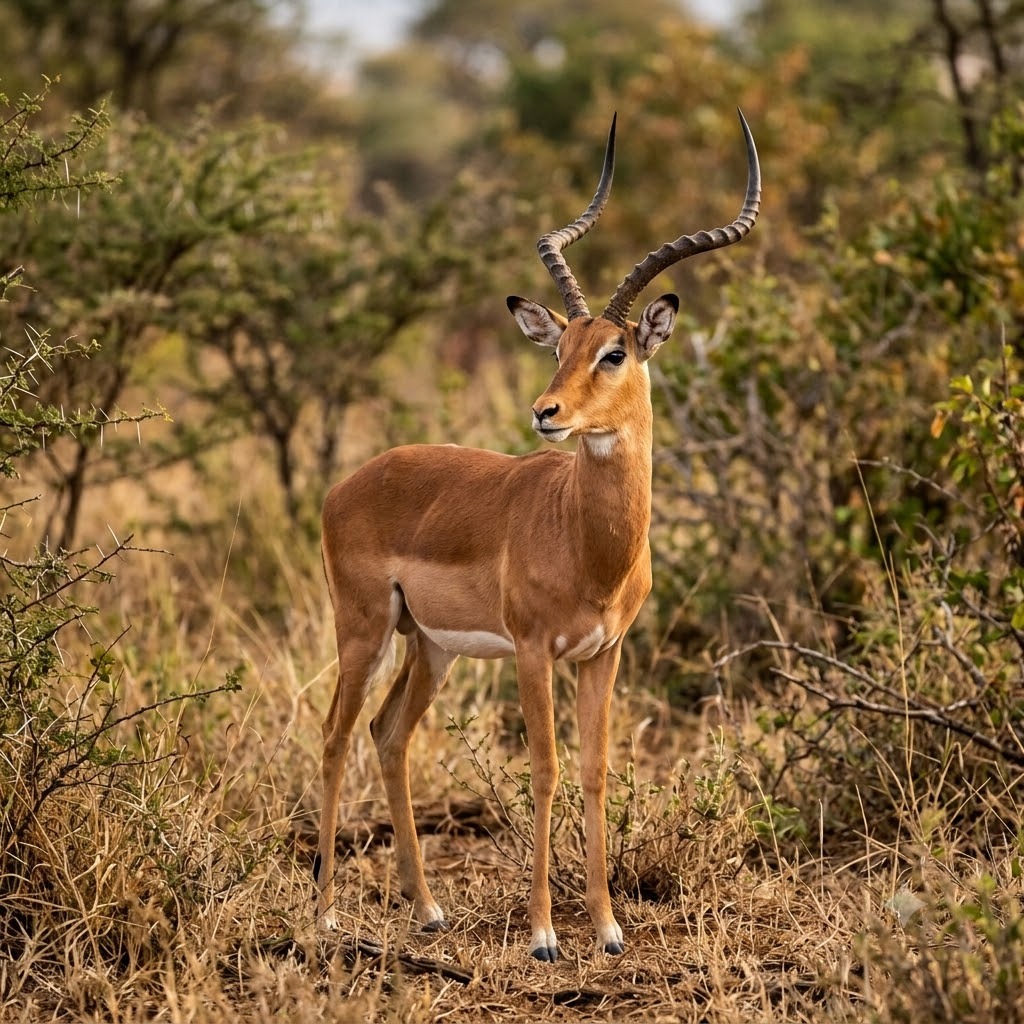
The impala is a medium-sized antelope of clean, striking lines. The coat is a glossy reddish-brown along the back that fades to tan on the flanks and white on the belly, throat, and chin. A distinctive black vertical stripe runs down each buttock and along the tail, forming an "M" from behind - a reliable field mark. Rams stand about 35 to 40 inches at the shoulder and weigh 120 to 160 pounds; ewes are smaller and hornless. Only rams carry horns: slender, ridged, lyre-shaped sweeps that curve up, out, and back, commonly reaching 20 to 30 inches. Look also for the black scent-gland tuft on each hind leg.
Range & Habitat (US)
The impala's home range is the savanna, woodland edge, and acacia bushveld of southern and eastern Africa, where it is one of the most numerous antelope. In the United States it is not a native or wild-ranging animal, but a limited number of Texas Hill Country and other exotic game ranches keep free-range and high-fence impala herds. Whether on safari or an American ranch, the species favors the same setting: open grassland for feeding and vigilance, brush and scattered trees for cover, and reliable water within reach. Impala rarely stray far from water and cling to the transition zones where cover meets the open.
Behavior & Sign
Impala are gregarious and nervous, living in herds that stay in near-constant motion. During the rut, dominant rams gather harems and defend territory with loud, guttural roaring, while bachelor rams band into separate groups. Their defining trait is athleticism: alarmed impala explode into prodigious leaps, clearing ten feet in height and thirty in length to confuse a predator. A spooked herd is gone fast. Sign includes small pointed cloven tracks, scattered pelleted droppings, well-worn trails to water, and communal dung middens. An alarm snort and the drum of hooves often signal that a hunter has been detected.
Hunting Seasons & Timing
On safari, impala can be hunted year-round in many areas, but the southern-hemisphere winter months of roughly May through September are prime: cooler weather, thinner cover, and concentrations near water make for the best conditions. The rut, in autumn, adds the drama of roaring rams and preoccupied animals. On US exotic ranches, impala may be hunted through much of the year, since exotics are typically not governed by native-game seasons. In all cases, the early and late hours are most productive, when herds move to feed and water before the heat pushes them into shade.
Hunting Methods
Spot-and-stalk is the classic impala method. Hunters glass open country and woodland edges to locate a herd, judge the rams, then use terrain, brush, and wind to close for a shot off shooting sticks. Because impala are so alert and quick to bolt, a careful, unhurried approach matters more than speed. Ambush hunting from a blind over a waterhole or well-used trail is also effective, especially in dry conditions when animals must drink daily. Whichever method is used, the challenge is the herd's many eyes: staying unseen and downwind is the whole game.
Where to Find Them - Reading the Terrain
Read impala country as a balance of food, water, and escape cover. Focus first on water: in dry country, trails to a waterhole or river bend concentrate animals morning and evening. Then look to the edges where open grassland meets acacia thornbush or riverine timber, where impala feed while staying close to cover. During the rut, listen for roaring rams to pinpoint territorial herds. Scan shaded thickets in midday heat, when herds bunch up to rest. On ranches, feeders and water points serve the same funneling role. Always approach from downwind, using every fold of ground and screen of brush.
Gear & Optics Needed
A quality binocular in the 8x42 or 10x42 range is essential for glassing herds and judging horn length before a stalk. Shooting sticks - a tripod or bipod rest - are standard for the offhand shots typical of plains game. A flat-shooting rifle in a common medium caliber with a dependable scope covers impala comfortably; the animal is not heavy-bodied and needs no magnum power. Bring a rangefinder, lightweight neutral clothing for warm days and cool mornings, sturdy boots, and a sharp knife. On safari your professional hunter supplies the logistics, but good glass and a rifle you shoot well are yours to bring.
Shot Placement & Field-Dressing
Ethical, fair-chase hunting demands a clean, quick harvest. The broadside shot to the heart-lung area - low and just behind the front shoulder - offers the largest margin for error on a jumpy animal like the impala. Wait for the herd to settle, pick your ram, range the distance, and take only a calm, unobstructed shot; pass anything marginal, since a wounded impala can vanish into the herd instantly. Give the animal time before following. Field care in the African heat is urgent: the carcass must be bled, opened, and cooled quickly. On safari the skinners handle much of this, but the shooting decision and follow-up are always the hunter's responsibility.
Meat & Eating Quality
Impala venison is among the finest of the African plains-game meats - lean, tender, and mild, without the strong flavor some antelope carry. As with all game, eating quality depends heavily on field care: rapid bleeding, cooling, and clean handling in the heat make the difference between excellent and spoiled meat. The backstraps and loins are prized for quick grilling, while larger muscles suit slow cooking, biltong, or sausage. On safari, impala is a staple of the camp table - an honest, practical harvest as well as a sporting one.
Common Mistakes
The most common error with impala is underestimating how many eyes are watching: hunters focus on one ram and forget that the whole herd is on alert, and a single nervous ewe blows the stalk. Ignoring the wind is fatal, as impala scent danger readily. New safari hunters also rush the shot when a herd starts milling, or fail to hold on one specific animal, ending up with a poor hit. Other mistakes include stalking too fast, skylining on open ground, and not practicing off shooting sticks before the trip. Patience, wind discipline, and a settled shot off the sticks solve nearly all of them.
Regulations & Conservation Note
The impala is a conservation success across much of its range, thriving under regulated safari hunting that gives the animal and its habitat tangible economic value. Hunting fees fund anti-poaching, habitat protection, and rural livelihoods, giving communities a stake in keeping wildlife on the land. On safari, hunt only through licensed operators and professional hunters, follow the area's quotas, and handle trophy-import and health documentation correctly. On US ranches, confirm the property's licensing and any state requirements for exotic species. Hunting legally helps keep impala populations healthy and wild land in wildlife.
Best Suited For
The impala is the ideal first African plains-game animal and rewarding at any level of experience. It suits hunters who want an attainable, spirited spot-and-stalk without the cost or physical extremes of the great trophies. Because herds are common and the terrain is walkable, it offers plenty of chances to learn safari fundamentals - glassing, judging horns, and shooting off sticks. It is a fine first taste of African hunting, and equally satisfying for the veteran who values clean shooting, good meat, and a beautiful ram.
FAQ
Is impala a good first African animal? Yes - it is the classic introduction to plains game. Impala are abundant, affordable, and teach the core safari skills of glassing, stalking, judging horns, and shooting off sticks, without extreme terrain.
Why are impala so hard to approach? Herds have many alert eyes and a keen nose, and impala are famously jumpy - they explode into leaps and scatter at the first hint of danger. Wind discipline and a slow, hidden approach are essential.
What makes a good impala ram? Only rams carry the lyre-shaped horns. Length, symmetry, and the sweep of the curve define a good ram, and experienced eyes learn to judge these quickly before the herd moves off.
Can I hunt impala in the United States? Yes, on a limited number of exotic game ranches, mainly in Texas. It is not a native or wild-ranging US animal, so ranch hunting is the domestic option.
Is impala good to eat? Very - it is one of the best plains-game meats, lean and mild. As with all game, fast cooling and clean handling in the heat are what keep it excellent.