Mouflon
The mouflon is a wild sheep widely regarded as the ancestor of all domestic sheep, and across the ranches of the Texas Hill Country it has become one of the most accessible and rewarding exotic hunts in the United States.
🗓️ Last reviewed: June 2026
Overview
The mouflon is a wild sheep widely regarded as the ancestor of all domestic sheep, and across the ranches of the Texas Hill Country it has become one of the most accessible and rewarding exotic hunts in the United States. Brought to North America for hunting and conservation decades ago, mouflon adapted well to the rugged limestone hills and brush country of central Texas, where free-ranging herds now roam private land and are pursued year-round with no draw or tag lottery. A handsome, athletic sheep with a reddish-brown coat, a pale saddle patch, and the magnificent curling horns of a mature ram, the mouflon offers a true spot-and-stalk sheep hunt at a fraction of the cost and difficulty of a mountain sheep. For the hunter who wants the challenge of hunting wary, sharp-eyed sheep without a once-in-a-lifetime draw, the mouflon is hard to beat.
Identification & Appearance
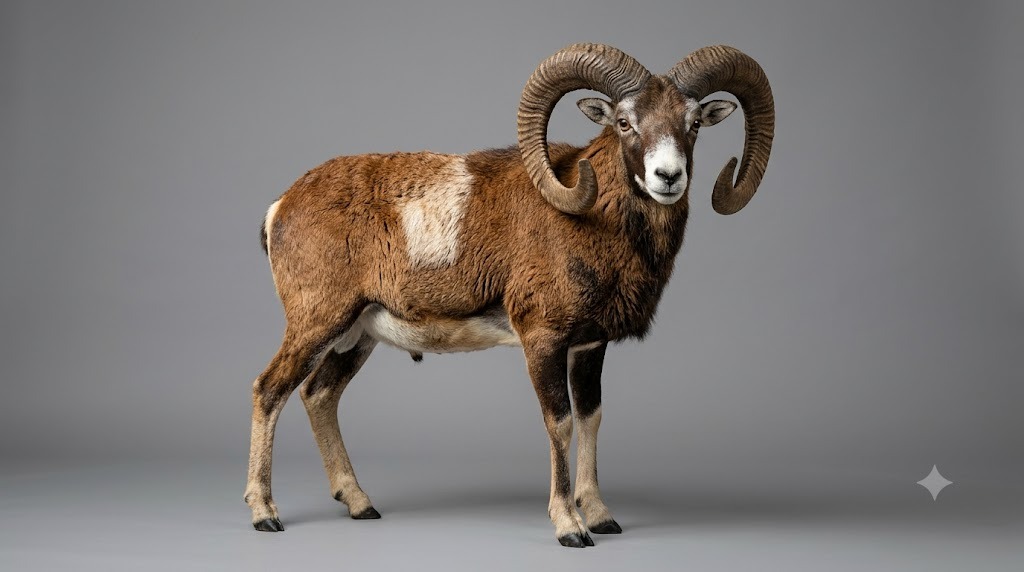
The mouflon is a medium-sized wild sheep with a compact, muscular build and a striking coat. The body is a rich reddish-brown that fades to a lighter belly and legs, and mature rams typically show a pale, cream-colored saddle patch on the flanks along with white markings on the muzzle and face. Rams are the prize: they carry heavy horns that sweep back, down, and then curl forward and up in a tight arc, with older rams growing horns that can approach or complete a full curl. Ewes are smaller, plainer in color, and usually either hornless or carry only short, slender horns, making sex easy to tell in the field. Both sexes have the alert, slender-legged look of true sheep. A mature ram's curling horns, reddish coat, and pale saddle make it one of the most recognizable and attractive exotics in Texas.
Range & Habitat (US)
In the United States, free-ranging mouflon are concentrated on the ranches of the Texas Hill Country and the broader Edwards Plateau, where they thrive in rugged limestone hills, cedar and oak brush, and the open draws and grassy benches between. They are also found on exotic ranches elsewhere in Texas and across parts of the Southwest. Mouflon are agile, sure-footed animals that favor broken, rolling terrain where they can climb, see, and slip away, often working the edges between thick brush and open hillside. Like other sheep, they use elevation and sightlines to their advantage, bedding where they can watch their backtrail and feeding in the cooler hours. This combination of cover and open country is exactly what makes the Hill Country such good mouflon habitat and such a satisfying place to hunt them.
Behavior & Sign
Mouflon are wary, sharp-eyed sheep with the same caution and keen vision that make wild sheep a genuine challenge anywhere. They form bands of ewes, lambs, and younger animals, while mature rams often run in small bachelor groups or hold apart, especially outside the breeding season. They are most active feeding in the early morning and late evening, retreating to shaded brush or high vantage points to bed during the heat of the day. Spooked mouflon move fast and put distance and terrain between themselves and danger quickly. Sign includes small, sheep-like tracks on trails and in soft ground, droppings on bedding benches and along travel routes, and well-worn paths through brush between feeding and bedding areas. Glassing the open hillsides and draws at first and last light is the surest way to locate them.
Hunting Seasons & Timing
As an exotic in Texas, the mouflon is not regulated by a state-set season, and on private land it may generally be hunted year-round with a valid Texas hunting license and the landowner's permission - there is no draw, no tag lottery, and no closed season. This makes the mouflon a true any-time, no-draw opportunity, one of its biggest attractions for hunters who do not want to wait years for a sheep tag. That said, the cooler months from fall into winter are the most comfortable and practical: easier stalking in mild weather, simpler care of the meat out of the heat, and rams looking their best as the breeding season approaches. Always confirm the current Texas license requirement and any specific ranch rules before you hunt, since access and details are set by the landowner.
Hunting Methods
Spot-and-stalk is the classic and most rewarding method for mouflon, and it plays out like a scaled-down version of a true sheep hunt. Hunters glass the open hillsides, grassy benches, and draws of the Hill Country from elevated vantage points, locate a band of sheep or a lone ram, then plan a careful stalk that uses terrain and wind to close on animals with excellent eyesight. Because mouflon favor broken, brushy country, still-hunting slowly along edges and working from cover can also be productive, and some hunters watch feeding areas at dawn and dusk. Shots range from moderate to fairly long depending on the terrain, so a steady rest and accurate shooting matter. Patience, careful movement, and reading the wind are far more important than covering miles, and a well-planned stalk on a sharp ram is the heart of the hunt.
Where to Find Them - Reading the Terrain
Hunt the broken country: glass the open hillsides, grassy benches, and brushy draws of the Hill Country where mouflon feed and travel, and watch the edges between thick cover and open ground. Look from elevated vantage points at first and last light for the reddish bodies and pale saddles of sheep against the hillside, and for the curling horns of a ram. Well-worn trails through brush, small sheep tracks in soft ground, and droppings on bedding benches mark where animals move between feeding and bedding areas. Mouflon often bed high where they can see, so check shaded slopes and vantage points during the day. Once you locate sheep, use the rolling terrain and brush to plan a stalk, keep the wind in your favor, and approach slowly and quietly, since their eyesight is their best defense.
Gear & Optics Needed
Mouflon hunting is a glassing-driven spot-and-stalk pursuit in rolling, brushy hill country, so good optics are at the top of the list. A quality 10x42 binocular lets you pick sheep and judge a ram's horns across the hillsides, and a spotting scope helps size up a ram from a distance before you commit to a stalk; a rangefinder is valuable for the longer shots the open draws can offer. A mouflon is not a heavy animal, so a standard deer-class rifle is plenty - cartridges in the .243 to .30 caliber range with a good bullet are well suited - paired with a steady rest such as shooting sticks or a bipod. Add sturdy boots for the limestone and brush, layered clothing for cool mornings, and a plan to quarter and cool the meat. Practice shooting from field positions before you go.
Shot Placement & Field-Dressing
A clean, ethical harvest depends on a calm, well-placed shot and an unhurried setup. The broadside shot to the heart-lung area, tight behind the front shoulder and into the lower third of the chest, gives the best margin on a mouflon and drops it cleanly. Wait for the sheep to stand calm and clear, settle onto a steady rest, range the distance, and squeeze off a controlled shot rather than rushing a moving animal. Mouflon are tough for their size and can travel if hit marginally, so place the shot well and be ready to follow up if needed. Field care is straightforward but should be prompt, especially in warmer weather: dress the animal cleanly, skin and quarter it, and cool the meat quickly. Work tidily, keep the meat clean, and follow all carcass-handling and transport rules.
Meat & Eating Quality
Mouflon makes good table fare, with mild, lean meat that compares favorably to other wild sheep and is well regarded by those who hunt them, especially when the animal is handled well in the field. As with all game, eating quality depends heavily on prompt, clean field care and rapid cooling, and a younger animal is generally more tender than a fully mature ram. The loin and backstrap are excellent with quick, high-heat cooking, while the leg and shoulder muscles do well roasted, braised, or ground. A mouflon yields a sensible amount of quality red meat for its size - enough to fill the freezer from a single animal without overwhelming you. For the hunter who values meat as well as the trophy, the mouflon delivers a satisfying return on a fair-chase hunt.
Common Mistakes
The most common mistake with mouflon is underestimating how sharp-eyed and wary they are - hunters who skyline themselves, move too fast, or ignore the wind often watch sheep vanish over a ridge before they ever get a shot. Skimping on glassing is another error: mouflon are far easier to find by patient glassing from a good vantage than by walking them up. Some hunters misjudge a ram's horns in the excitement and pass or take the wrong animal, so take the time to size him up with a spotting scope. Rushing the shot at a moving or alert sheep, or shooting without a steady rest, leads to lost game. Finally, hunters sometimes neglect prompt field care of the meat in warm weather. Patience, careful movement, steady shooting, and good meat care are the keys.
Regulations & Conservation Note
The mouflon occupies a familiar place in Texas wildlife: as an introduced exotic on private land, it is hunted under the landowner's authority with a valid Texas hunting license, without a state season, draw, or bag limit. Ranches that hold mouflon and other exotics have a strong incentive to maintain healthy herds and good habitat, and the income from regulated, fair-chase exotic hunting helps fund that stewardship and keeps land in wildlife rather than other uses. Responsible hunters apply fair-chase ethics, take only clean shots within their range, fully use the meat, and follow all license, access, and carcass-movement rules. Hunted legally and ethically, the free-ranging mouflon offers an accessible, no-draw sheep experience while supporting the private-land conservation that makes it possible.
Best Suited For
The mouflon suits the hunter who wants a genuine spot-and-stalk sheep hunt without the cost, lottery, or extreme difficulty of a mountain sheep. It rewards patient glassing, careful movement, attention to the wind, and steady shooting, and it offers an attractive curled-horn trophy and good meat on accessible Texas ranch land that can be hunted year-round. Hunters who enjoy rolling hill country, planning a careful stalk on a wary animal, and the satisfaction of outwitting a sharp-eyed ram will find the mouflon deeply enjoyable. It is a great choice for a first sheep-style hunt, for meat hunters, and for anyone wanting a no-draw exotic, while still offering enough challenge to satisfy experienced hunters who respect a cautious quarry.
FAQ
Do I need a special permit to hunt mouflon? In Texas, mouflon are an exotic on private land, so there is no state season, draw, or tag - you hunt with a valid Texas hunting license and the landowner's permission. Always confirm the current license requirement and any specific ranch rules before you go.
Why are mouflon challenging to hunt? Mouflon are true wild sheep with excellent eyesight and a wary nature, and they favor broken hill country where they can see and slip away. Locating and approaching them takes patient glassing, careful movement, and attention to the wind, which is what makes them a satisfying spot-and-stalk quarry.
When is the best time to hunt mouflon? Because they are an exotic, mouflon can be hunted year-round in Texas, but the cooler months from fall into winter are most comfortable and practical, easing stalking and the care of the meat and catching rams in prime condition.
Is mouflon meat good to eat? Yes - it is mild, lean, and well regarded among wild sheep, especially when handled well in the field. Prompt cleaning and quick cooling are important, and a younger animal is generally more tender than an old ram.
What rifle should I bring for mouflon? A standard deer-class rifle is plenty for a mouflon. A cartridge in roughly the .243 to .30 caliber range with a good bullet and a steady rest such as shooting sticks or a bipod is well suited to this medium-sized, fair-sized-shot sheep.