Muskox
The muskox is a shaggy, ice-age survivor of the Arctic tundra and one of the most remarkable and hard-won big-game animals a hunter can pursue in the United States.
🗓️ Last reviewed: June 2026
Overview
The muskox is a shaggy, ice-age survivor of the Arctic tundra and one of the most remarkable and hard-won big-game animals a hunter can pursue in the United States. Found across the treeless barrens of Alaska, where native herds persist and reintroduced populations now thrive in places like Nunivak Island, the Seward Peninsula, and the eastern Arctic, the muskox is hunted almost exclusively through a limited draw and most often with a guide because of the remoteness, the weather, and the logistics involved. A massive, low-slung animal cloaked in a curtain of dark hair over the finest insulating wool on earth - the prized qiviut - the muskox offers a demanding far-north hunt, excellent meat, and a trophy that carries the whole feel of the Arctic. For the hunter willing to draw a tag and travel to the edge of the continent, the muskox is unforgettable.
Identification & Appearance
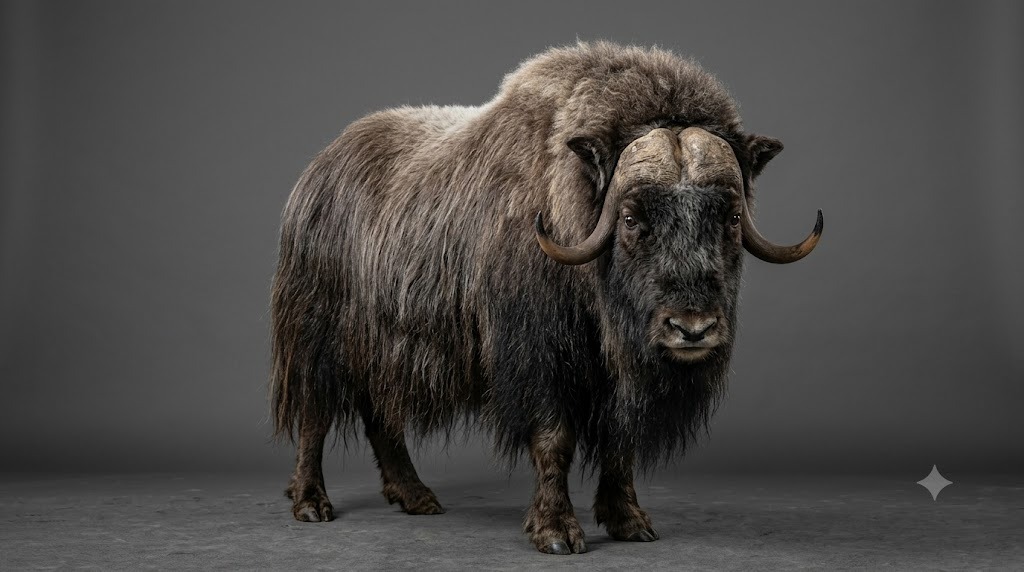
The muskox is a stocky, powerfully built animal that looks far larger than it stands, thanks to a long, dark, skirt-like guard coat that hangs nearly to the ground over a dense undercoat of qiviut wool. The body is dark brown to nearly black, often with a paler saddle and lighter legs, and the build is short-legged, deep-chested, and humped at the shoulders. Both bulls and cows carry horns: in mature bulls the horns form a heavy, fused boss across the forehead and sweep down beside the face before hooking sharply up at the tips, while cows' horns are lighter, more slender, and separated by a strip of hair rather than a solid boss. Telling bulls from cows takes a careful look at horn mass, the width and solidity of the boss, body size, and behavior - bulls are noticeably larger and heavier. Mature bulls commonly weigh several hundred pounds, and the shaggy coat, sweeping horns, and humped silhouette make the muskox unmistakable on the open tundra.
Range & Habitat (US)
In the United States, muskox are found in Arctic and western Alaska, where native herds and successful reintroductions occupy the treeless tundra, coastal plains, and river-cut barrens of the far north. Strongholds include Nunivak Island, Nelson Island, the Seward Peninsula, and parts of the eastern Arctic and North Slope, with animals ranging across windswept tundra, frozen river drainages, and low coastal hills. Muskox are built for extreme cold and persist year-round in some of the harshest country on the continent, feeding on grasses, sedges, willows, and lichens that they reach by pawing through snow. They favor open, exposed ground where wind keeps the snow shallow and forage reachable, often staying near ridges, river bluffs, and wind-scoured slopes. This is remote, roadless country, and reaching the herds usually means small aircraft, boats, or snow machines rather than a drive to the trailhead.
Behavior & Sign
Muskox are herd animals of the open tundra, gathering in groups of cows, calves, and younger animals, while mature bulls may run with the herd, in bachelor groups, or alone outside the rut. They are superbly adapted to cold and wind and tend to move relatively little, conserving energy and staying near reliable forage. Their most famous behavior is the defensive circle or line: when threatened, a herd bunches together, often with adults facing outward and calves protected behind, standing their ground rather than fleeing. This makes a muskox herd surprisingly approachable but also demands real care and ethics from the hunter. A cornered or wounded bull is powerful and dangerous, and the heavy boss and horns are formidable. Sign on the tundra includes large, blocky tracks in snow or soft ground, droppings, beds in wind-scoured areas, tufts of shed qiviut caught on willows and rocks, and pawed-out feeding craters in the snow. Because the country is so open, finding muskox is largely a matter of glassing vast tundra and spotting the dark, shaggy forms against the white or tawny ground.
Hunting Seasons & Timing
Muskox in Alaska are managed under a tightly controlled, draw-based permit system, with a limited number of tags allocated for specific hunt areas through registration and drawing hunts - this is a regulated, tag-allocated opportunity, not an over-the-counter or year-round hunt. Seasons are typically set in late winter and early spring, and in some areas a fall window, timed to align with management goals, accessibility, and the condition of the animals, and many hunts are scheduled when snow and ice allow travel by snow machine or when conditions suit fly-in access. Because of the remoteness and the harsh weather, the great majority of nonresident hunters, and many residents, hunt with a guide or transporter. The cold months bring brutal conditions but also firmer travel and better hide and meat care, while the timing of any given hunt is dictated by the specific permit. Always confirm the exact hunt area, season dates, drawing or registration rules, guide or transporter requirements, and bag specifics with Alaska's regulations well before you go.
Hunting Methods
Spot-and-stalk across open tundra is the defining method for muskox, though the stalk is short and the challenge lies far more in finding the animals, reaching the country, and shooting cleanly than in closing the distance. Hunters travel by small aircraft, boat, or snow machine into roadless terrain, then glass huge stretches of tundra and river country from high points or while covering ground, locate a herd or a lone bull, and make a careful approach. Because muskox often stand and form a defensive group rather than running, the final approach can be deceptively close - which places enormous responsibility on the hunter to identify the right animal, get a calm and steady rest, and place an accurate shot without crowding or stressing the herd. Shots are usually at moderate range. Muskox are large, tough, and potentially dangerous, so hunters should carry adequate firepower, be ready for follow-up shots, and approach downed animals with great caution. Patience, sound judgment, cold-weather toughness, and disciplined shooting are essential.
Where to Find Them - Reading the Terrain
Glass the open tundra: windswept ridges, river bluffs and drainages, coastal plains, and the wind-scoured slopes where snow stays shallow and forage is reachable. Look for the dark, shaggy bodies of muskox standing out against snow or pale tundra, often bunched as a herd on exposed ground. Large blocky tracks, pawed-out feeding craters in the snow, droppings, beds in wind-protected spots, and tufts of shed qiviut on willows and rocks all mark where animals live and feed. Because the country is so vast and roadless, expect to glass enormous areas and travel by air, water, or snow machine to locate herds. Once you find animals, use the rolling terrain, river cuts, and what little relief exists to plan a careful approach, keep the wind in your favor, and move in slowly and deliberately so you can identify the right animal and take a clean, ethical shot.
Gear & Optics Needed
Muskox hunting is a remote, cold-weather, glassing-intensive pursuit in extreme conditions, so reliable optics and serious cold-weather systems are essential. A quality 10x42 binocular and a spotting scope let you locate herds and judge bulls across vast tundra, and a rangefinder helps confirm distances in deceptive open country. Bring a hard-hitting, dependable rifle - cartridges in the .30 caliber class or larger with tough, deep-penetrating bullets suit a heavy, durable animal, and bolt actions are favored for cold-weather reliability. A steady rest such as a bipod or shooting sticks is valuable. Just as critical is the cold-weather and travel gear: layered insulation rated for Arctic conditions, windproof outerwear, insulated boots, a way to keep optics and rifle functioning in deep cold, and gear suited to fly-in, boat, or snow-machine travel. Plan carefully for skinning, caping, caring for the valuable hide and qiviut, and packing out a great deal of meat in brutal conditions. Test everything in the cold and practice from field positions before the hunt.
Shot Placement & Field-Dressing
A clean, ethical harvest on such a large, tough, and potentially dangerous animal depends on precise shot placement and adequate power, and on the discipline not to shoot into a bunched herd. Wait for a clear, broadside opportunity at the heart-lung area, tight behind the front shoulder and into the lower third of the chest, and be certain of your target and of what is behind it, since muskox often stand close together. Many hunters favor breaking the shoulder to anchor a heavy bull. Take the shot from a calm, steady rest, and be ready to follow up. Approach a downed muskox with great caution and from behind, as the boss and horns are dangerous. Field care in the Arctic is demanding but the cold is an ally: a mature muskox yields a large amount of meat that must be skinned and quartered, and the heavy hide and prized qiviut should be handled carefully if you intend to keep them. Work cleanly, protect the meat from grit and hair, and follow all carcass-care, salvage, and disease rules for the hunt area.
Meat & Eating Quality
Muskox meat is excellent - lean, dark, fine-grained, and rich, often compared favorably to high-quality beef and prized by hunters and Arctic communities alike. As with all game, eating quality depends heavily on field care, though the Arctic cold makes keeping the meat clean and cool comparatively straightforward. The tender loin and backstrap reward quick, high-heat cooking, while the large shoulder and hindquarter muscles braise, roast, slow-cook, or grind beautifully, and a mature animal yields an abundance of premium red meat that goes a long way in the far north. For meat hunters, a muskox provides both a striking trophy and a generous, genuinely sought-after supply of table fare, fully rewarding the effort and expense of a hard Arctic hunt.
Common Mistakes
The most common mistake with muskox is underestimating the trip itself - the cold, the remoteness, the travel logistics, and the weather can defeat a hunter long before the shot. Failing to prepare gear and clothing for true Arctic conditions, or trusting equipment that quits in deep cold, leads to misery and lost opportunity. On the animals, the classic error is shooting carelessly into a bunched, defensive herd without being certain of the target and the background, which risks wounding or hitting the wrong animal. Bringing too light a rifle on such a large, tough animal causes lost game, as does crowding or stressing the herd during the approach. Hunters also sometimes approach downed or wounded bulls without caution, risking injury from the boss and horns, and some neglect the careful handling that the valuable hide and qiviut deserve. Thorough preparation, the right gear, sound judgment, adequate power, and respect for the animal are all essential.
Regulations & Conservation Note
Muskox occupy a carefully managed place in Alaska's wildlife system: after being lost from Alaska in the past, the species was reestablished through reintroduction, and herds are now managed under a strict, limited draw and registration system with set permit numbers to keep populations in balance with the fragile Arctic habitat. Regulated, tightly controlled hunting is part of that management and helps fund and support wildlife conservation in the far north. Responsible hunters apply fair-chase ethics, take only clean shots with adequate equipment, avoid stressing or shooting into herds carelessly, fully use the meat, care for the hide and qiviut, and follow all drawing, registration, permit, salvage, and carcass-care rules for their hunt area. Hunting muskox legally and ethically supports the continued health of these recovered herds and the careful stewardship of the Arctic lands that sustain them.
Best Suited For
The muskox suits the prepared, cold-hardy hunter who is ready for a remote, logistically demanding Arctic hunt and who values a truly distinctive far-north trophy and excellent meat over an easy or comfortable outing. It rewards careful planning, the right cold-weather gear, sound judgment around a defensive herd, disciplined shooting with an adequate rifle, and respect for a powerful, potentially dangerous animal. Hunters who are drawn to the Arctic, who can handle harsh weather and travel by air, boat, or snow machine, and who appreciate the qiviut, the meat, and the sheer wildness of the country will find the muskox deeply rewarding, and the Alaska draw makes it a special, limited opportunity for those willing to apply. It is less suited to beginners or to those seeking a quick, warm, or easily accessed hunt, but for a tough hunter chasing an ice-age icon, the muskox is extraordinary.
FAQ
Do I need a special permit to hunt muskox? Yes - muskox in Alaska are hunted only through a strictly limited, draw-based permit and registration system with set tags for specific hunt areas. Most hunters, especially nonresidents, hunt with a guide or transporter. Always confirm the drawing, registration, season, and access rules for the specific hunt area where you plan to go.
Why are muskox challenging to hunt? The hardest part is usually the trip, not the stalk: muskox live in remote, roadless Arctic tundra reached by small aircraft, boat, or snow machine, in extreme cold and weather. The animals often stand in a defensive group rather than fleeing, which puts a premium on careful target identification and an ethical, accurate shot.
When is the best time to hunt muskox? Seasons are set by the permit and typically fall in late winter and early spring, with some fall opportunity in certain areas, timed to management goals and accessibility. The cold is harsh but aids travel and meat and hide care. The exact dates are dictated by the specific hunt and drawing.
Is muskox meat good to eat? Yes - it is lean, dark, fine-grained, and rich, often compared favorably to good beef, and a single animal yields a large amount. The Arctic cold makes keeping it clean and cool relatively easy, and it is highly valued by hunters and northern communities.
What rifle should I bring for muskox? A hard-hitting, reliable cartridge in roughly the .30 caliber class or larger, paired with a tough, deep-penetrating bullet and a steady rest, is well suited to such a large, durable animal. Cold-weather reliability matters, so a dependable bolt action and gear that keeps functioning in deep cold are important.