Nilgai
The nilgai is the largest antelope native to Asia and, thanks to ranch introductions a century ago, one of the most distinctive free-range big-game animals a hunter can pursue in the United States.
🗓️ Last reviewed: June 2026
Overview
The nilgai is the largest antelope native to Asia and, thanks to ranch introductions a century ago, one of the most distinctive free-range big-game animals a hunter can pursue in the United States. Brought from India to South Texas in the 1920s and 1930s, nilgai escaped and established thriving wild herds across the coastal brush country, where they are now hunted as a true free-ranging trophy and a prized meat animal. A nilgai hunt is a demanding, spot-and-stalk affair across open rangeland: these antelope have exceptional eyesight, cover ground at a tireless trot, and are notoriously tough to put down. For the hunter who wants a physical, glassing-intensive hunt in big country, the nilgai delivers a challenge that rivals any native species.
Identification & Appearance
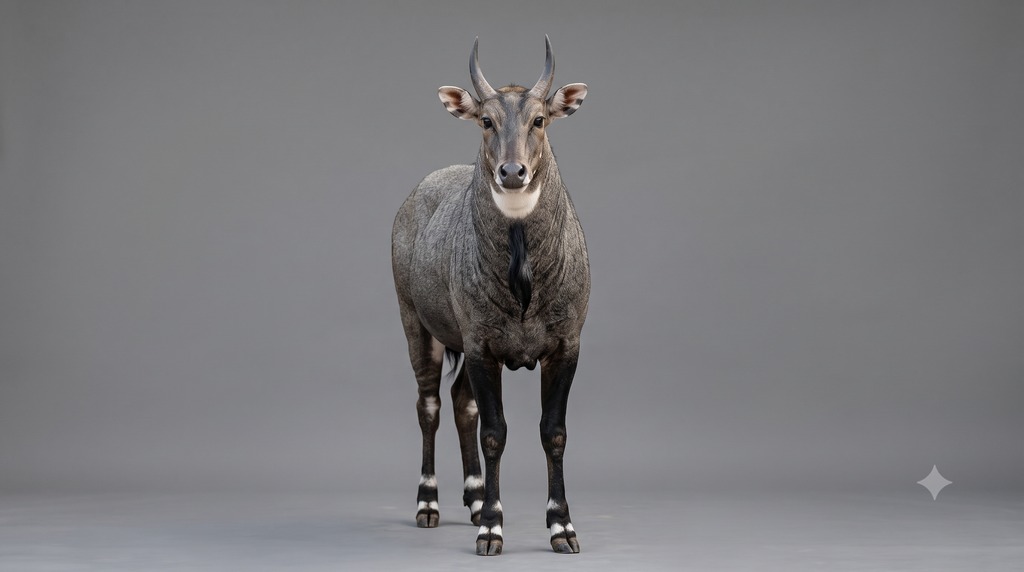
The nilgai is built more like a small horse than a deer, standing tall at the shoulder with a sloping back, long legs, and a deep chest. Mature bulls are striking: they carry a blue-gray coat that gives the species its other name, "blue bull," along with a tufted throat beard, white throat patch, and white markings on the face and legs. Bulls are far larger than cows and can weigh well over 400 to 600 pounds, making them the heaviest exotic commonly hunted in Texas. Only the bulls carry horns, which are short, smooth, sharply pointed, and slightly curved forward, rarely exceeding eight or nine inches. Cows and young animals are a tawny yellow-brown and lack horns, so trophy identification in the field comes down to body color, size, and the presence of the beard and horns.
Range & Habitat (US)
In the United States, free-ranging nilgai are concentrated in the South Texas coastal plain, particularly the large ranches of the Rio Grande valley and the brush country between Kingsville and the Gulf coast. They favor open grassland mixed with mesquite, prickly pear, and scattered brush mottes that provide both feeding and security cover. Unlike forest deer, nilgai gravitate to country where they can see for long distances and use their eyes to detect danger early. They tolerate hot, semi-arid conditions well and range widely in search of forage and water. Outside of Texas, nilgai are also kept on high-fence exotic ranches in other parts of the Southwest, but the free-range population that defines the species as a hunting target lives in the Texas coastal brush.
Behavior & Sign
Nilgai are wary, wide-ranging, and quick to flee at the first hint of danger, relying on keen eyesight more than scent or hearing. They are most active in the cooler hours of early morning and late evening, bedding in shade through the heat of the day. Cows and calves form loose herds while older bulls are often solitary or run in small bachelor groups. A distinctive habit is the use of communal dung piles, where animals repeatedly deposit droppings in the same spots, leaving an obvious and reliable sign of nilgai activity. Tracks are large and cattle-like, and well-worn trails connect feeding flats to brush and water. When alarmed, a nilgai breaks into a ground-eating trot that can carry it out of sight across open country in moments.
Hunting Seasons & Timing
Because nilgai are a non-native exotic species in Texas, they are not protected by a state-set game season and may generally be hunted year-round on private land with landowner permission and a valid Texas hunting license. The practical season is dictated by weather and animal condition rather than regulation. Many hunters prefer the cooler months from fall through early spring, when daytime temperatures make long stalks and meat care far more manageable and animals move more during legal light. Summer hunts are possible but punishing in the South Texas heat. Always confirm current license requirements and the specific rules of the ranch you hunt, since access and any local restrictions are set by the landowner.
Hunting Methods
Spot-and-stalk is the classic and most rewarding method for nilgai. Hunters glass the open flats and brush edges from high vantage points or slow-moving vehicles, locate a bull, then plan a stalk that keeps the wind and terrain in their favor. Because nilgai see so well and bolt so readily, closing the distance for a confident shot is the central challenge of the hunt. Some hunters set up over water sources or known feeding areas, but the animals' wariness and wide range make sit-and-wait less reliable than active glassing. Given the species' legendary toughness, hunters should be prepared for a follow-up shot and choose a rifle and bullet capable of penetrating a heavy, deep-bodied animal.
Where to Find Them - Reading the Terrain
Focus your glassing on the seams between open grassland and brush, where nilgai feed in the open but stay close to escape cover. At first and last light, scan feeding flats, senderos, and the edges of agricultural fields. As the sun climbs, shift attention to shaded brush mottes and thicker cover where animals bed. Communal dung piles, heavy trails, and tracks at water mark the country an established herd is using. Big bulls often hold apart from the cow groups, so once you locate animals, look for a heavier, blue-gray body on the fringes. The premium is on elevation and patience: get high, glass thoroughly, and let the animals reveal themselves before committing to a stalk.
Gear & Optics Needed
Nilgai country is open and the shots can be long, so good glass is non-negotiable. A quality 10x42 binocular and a spotting scope let you pick apart distant brush edges and judge bulls before burning energy on a stalk. A reliable rangefinder is essential for the open-country distances common on these hunts. Bring a flat-shooting, hard-hitting rifle - many hunters favor cartridges in the .30 caliber class or larger with tough, deep-penetrating bullets, given how much animal a mature bull is. Add sturdy boots for covering ground in cactus country, sun protection, plenty of water, and shooting sticks or a bipod for a steady rest. Because bulls are huge and the climate is warm, a plan for quickly quartering and cooling several hundred pounds of meat is part of the essential kit.
Shot Placement & Field-Dressing
Nilgai are famously tough, so shot placement and bullet performance matter more than with most species. The broadside shot to the heart-lung area, tight behind the shoulder and into the lower third of the chest, is the most reliable; many experienced nilgai hunters favor breaking the near shoulder to anchor the animal, because a lung-shot nilgai can travel a long way. Be ready to shoot again rather than watch a wounded bull disappear into the brush. After the shot, approach with caution and confirm the animal is down. Field care is urgent in the South Texas heat: a mature bull yields a great deal of meat that must be skinned, quartered, and cooled as fast as possible. Work cleanly, keep dirt and hair off the meat, and get it on ice quickly.
Meat & Eating Quality
Nilgai is widely regarded as some of the finest wild meat available in North America, often compared favorably to fine beef and prized by chefs. The meat is lean, fine-grained, and mild, without the strong flavor some hunters associate with venison, and a single bull provides an enormous quantity of it. As with any animal, eating quality depends heavily on field care - rapid cooling and clean handling in the warm climate are essential. Tender cuts from the loin and backstrap excel with quick, high-heat cooking, while the large hindquarter muscles roast, braise, or grind beautifully. For meat hunters, the sheer yield and quality of a nilgai bull make the demanding hunt well worth the effort.
Common Mistakes
The most common mistake is underestimating how tough a nilgai is and using too light a rifle or bullet, which leads to lost animals. Hunters also frequently get busted by the species' extraordinary eyesight, skylining themselves or moving too fast during a stalk across open ground. Misjudging distance in the wide-open terrain causes missed or poorly placed shots, so a rangefinder and a steady rest are vital. Another error is failing to plan for the heat and the sheer mass of meat, then struggling to cool a huge carcass before it spoils. Finally, mistaking a horned bull for a hornless cow - or vice versa - at long range leads to identification errors, so confirm body color, size, and horns before shooting.
Regulations & Conservation Note
As a free-ranging but non-native species, nilgai occupy an unusual place in Texas wildlife management: they are not classified as native game, so they are hunted on private land under landowner authority with a standard Texas hunting license rather than under a fixed state season. This arrangement has turned nilgai into a valuable resource for South Texas ranches, where managed hunting provides income that supports broader habitat and wildlife conservation. Responsible hunters still apply fair-chase ethics, take only clean shots, fully use the meat, and follow all license requirements and any disease or carcass-movement rules in effect. Hunting nilgai legally and ethically keeps both the herds and the working rangelands that hold them healthy.
Best Suited For
The nilgai suits the hunter who wants a physically demanding, glassing-and-stalking hunt in big open country and who values exceptional meat. It is an excellent choice for those who enjoy spot-and-stalk hunting and are comfortable shooting at the longer ranges common on the coastal plain. Because the animals are large and tough, it rewards hunters who shoot well and bring an adequate rifle. It is less suited to those expecting a sit-in-a-blind ambush or a short, easy hunt. For an experienced big-game hunter looking for a unique free-range trophy and a freezer full of premium meat, the nilgai is hard to beat.
FAQ
Do I need a special license to hunt nilgai in Texas? No special tag is required for this exotic species - a valid Texas hunting license plus landowner permission is generally all you need, since nilgai are hunted on private land rather than under a fixed state game season. Always confirm current requirements before you hunt.
Why are nilgai considered so hard to kill? Nilgai are heavy, deep-bodied animals with dense muscle and a strong will to keep moving, so a marginal hit often means a long, difficult recovery. Using an adequate rifle and bullet and placing the shot precisely - often on the shoulder - is essential.
When is the best time to hunt nilgai? The cooler months from fall through early spring are ideal, because the lower temperatures make long stalks and meat care manageable and animals move more in legal light. Year-round hunting is possible but summer is punishing.
Is nilgai meat good to eat? Yes - it is some of the most highly regarded wild meat in North America, lean, mild, and often compared to fine beef. A single bull also yields a very large amount of meat.
What rifle should I bring for nilgai? A flat-shooting, hard-hitting cartridge in the .30 caliber class or larger, paired with a tough, deep-penetrating bullet, is a sound choice for such a large, durable animal in open country.