Rusa Deer
The rusa deer is a handsome tropical deer with a rut that can be heard across a valley.
🗓️ Last reviewed: July 2026
Overview
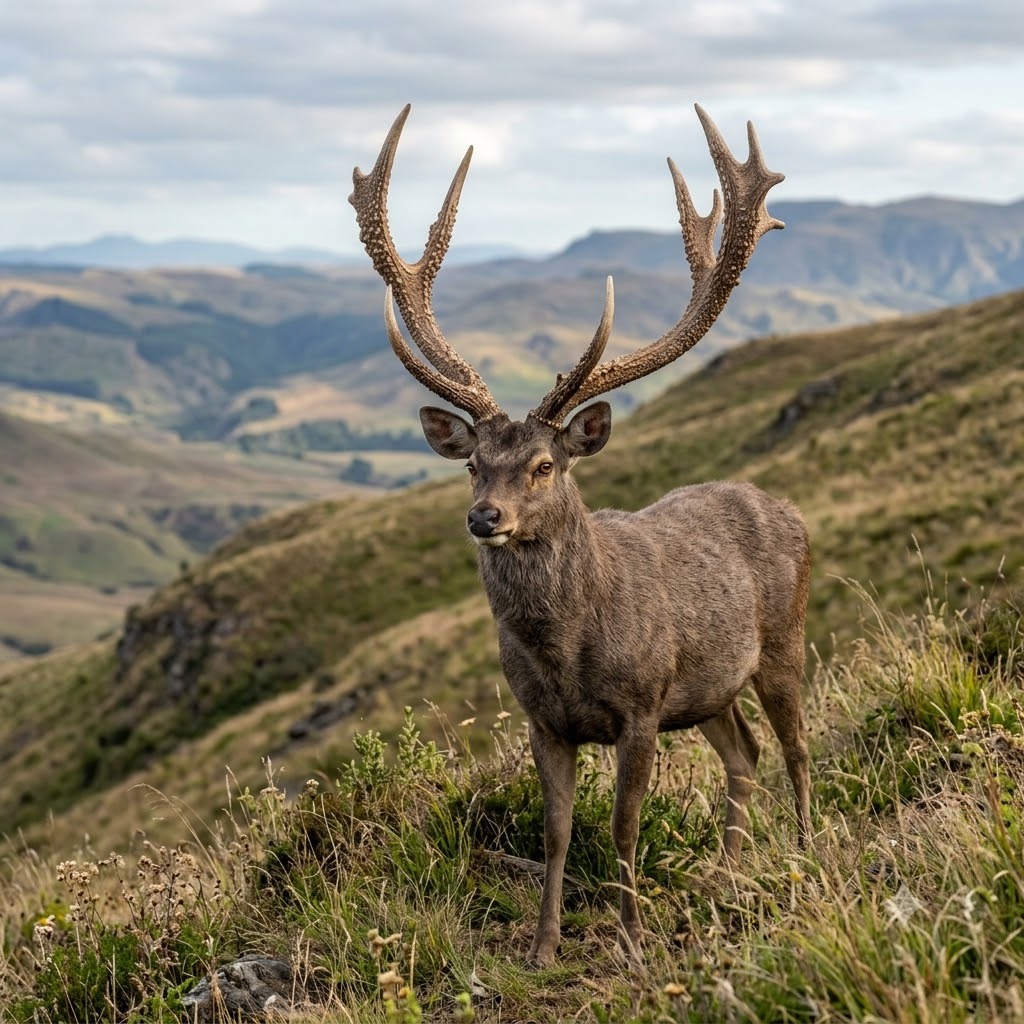
The rusa deer is a handsome tropical deer with a rut that can be heard across a valley. Native to the islands of Indonesia and introduced widely across the Pacific, it is established as wild game in New Caledonia and parts of Australia, and it appears on exotic-game ranches in Texas. Hunters prize the rusa for its long, coral-like antlers, its wary nature, and above all its dramatic, vocal rut, when stags roar and thrash vegetation to advertise for hinds. It is a spot-and-stalk animal of open ridges and timbered draws that pushes a hunter's glassing, calling, and stalking skills. For those chasing something beyond the familiar deer of home ground, the rusa offers a genuinely wild and rewarding pursuit.
Identification & Appearance
The rusa is a medium-sized deer, taller and rangier than an axis deer, standing roughly 40 to 45 inches at the shoulder. The coat is a coarse grayish-brown, often darker on the neck of rutting stags, with no adult spotting. Stags carry distinctive antlers - typically three points per side, with long, sweeping main beams and a wide, coral-like or lyre-shaped spread that is the animal's signature. Adult stags commonly weigh 130 to 250 pounds depending on population and habitat, with hinds noticeably smaller. The face is long, the ears large, and the overall build athletic. During the rut, stags carry vegetation draped on their antlers from thrashing brush, a striking and telltale sight in the field.
Range & Habitat
In the United States, rusa deer are found on exotic-game ranches, chiefly in the Texas Hill Country and South Texas. As free-ranging wild game they are best known from New Caledonia, where large populations roam the island's valleys and ridges, and from parts of Australia, along with their native Indonesian islands. Their preferred habitat is a mosaic of open grassy hillsides and ridgetops for feeding with timbered gullies, scrub, and forest edges for cover and bedding. They adapt to a range of tropical and subtropical country, but the recurring theme is open feeding ground within easy reach of thick security cover.
Behavior & Sign
Rusa deer are social, often seen in small groups of hinds with a dominant stag during the rut and in looser bachelor bands otherwise. They feed on grassy openings at dawn and dusk and retreat to cover during the heat of the day. The defining behavior is the rut: stags become highly vocal, roaring and honking to challenge rivals and gather hinds, and they thrash brush, hanging vegetation on their antlers and creating obvious wallows. Sign includes tracks on feeding openings, thrashed brush, wallows in damp low ground, and worn trails between bedding and feeding areas. The rutting vocalizations make locating stags far easier than for most deer.
Hunting Seasons & Timing
On US exotic ranches, rusa deer can generally be hunted year-round because exotics fall outside state game seasons, though the experience is best during the rut when stags are vocal and moving. Where rusa are wild game abroad, seasons and rules are set by the local jurisdiction and must be confirmed in advance. The rut is the premier window everywhere: stags roar, respond to calling, and move more openly, making them both easier to locate and more vulnerable. Outside the rut, hunting shifts to patterning feeding movement at first and last light. Always verify the exact rules and timing for your specific location before booking or hunting.
Hunting Methods
Spot-and-stalk is the classic rusa method: glass open hillsides and ridgetops at dawn and dusk, locate feeding or rutting deer, then use terrain and wind to close the distance. During the rut, calling to a roaring stag - answering his vocalizations to draw him in or pinpoint him for a stalk - is a thrilling and effective tactic. Ambush from a stand or blind over a feeding opening or wallow also produces, especially in the heat of the day. The best hunters combine glassing, patient stalking, and rut-time calling, always keeping the wind in their favor.
Where to Find Them - Reading the Terrain
Read the country as a pattern of feed, cover, and the routes between. Rusa feed on open grassy slopes, ridgetops, and clearings and bed in timbered gullies, scrub, and forest edge nearby. In the rut, look and listen for wallows in damp low ground, thrashed brush, and the hinds a dominant stag will hold. Glass the open feeding ground at first and last light, then mark the trails and saddles to bedding cover. Position downwind and use ridgelines and folds in the terrain to approach unseen. Locating a vocal rutting stag by ear, then stalking with the wind, is the surest path to success.
Gear & Optics Needed
Good glass is essential: a 10x42 binocular for scanning open hillsides and a spotting scope for broad country. A rangefinder is valuable in the deceptive terrain rusa favor. Lightweight, quiet clothing for warm tropical conditions keeps you comfortable on long glassing sits, and sturdy boots handle steep, timbered ground. A shooting stick or bipod steadies offhand shots on open slopes. Round out the kit with a sharp knife, a capable pack, a headlamp, insect protection, and a mapping app. Playing the wind still outweighs any gear you carry.
Shot Placement & Field-Dressing
Ethical, fair-chase hunting demands a clean, quick harvest. The broadside shot to the heart-lung area - low and just behind the front shoulder - offers the largest margin for error on a rusa's athletic frame. Wait for a calm, unobstructed, well-ranged animal and pass anything marginal, especially a stag facing hard or screened by brush. After the shot, give the deer time before taking up the track. Field-dress promptly, because the warm tropical climates rusa inhabit make rapid cooling critical to meat quality. Work cleanly, keep the cavity free of debris, and follow all local regulations on carcass handling and transport.
Meat & Eating Quality
Rusa venison is well regarded - lean, mild, and fine-textured, comparable to other quality wild deer meat. As always, eating quality depends far more on field care than on the animal itself: rapid cooling in a hot climate, clean handling, and proper aging where conditions permit make the difference. Backstraps and tenderloins are excellent for quick, high-heat cooking; the hindquarters roast or grind well; and the trim makes fine burger, sausage, and stew. For hunters chasing rusa abroad or on a ranch, the combination of a dramatic hunt and genuinely good table fare is a large part of the draw.
Common Mistakes
The most common error is ignoring the wind, since rusa are wary and quick to vacate once they scent a hunter. Others include glassing too little and stalking too soon, spooking deer by cresting ridges skylined, and misjudging distance in the open, deceptive terrain. During the rut, hunters often over-call or approach a roaring stag from the wrong side of the wind and blow the setup. Taking a rushed shot at a facing or brush-screened animal is another frequent mistake. Patient glassing, disciplined wind management, and unhurried shot selection consistently outperform aggressive, impatient tactics.
Regulations & Conservation Note
Rusa deer are an introduced species across much of their huntable range, so management goals and rules vary widely by jurisdiction - from managed wild populations abroad to ranch-raised exotics in the United States. Wherever you hunt them, buy the proper tags or permits, honor any seasons, quotas, and reporting requirements, respect private-land and ranch rules, and follow local carcass-handling laws. Because introduced deer can affect native habitats, hunting often plays a management role, but that does not lessen the obligation to hunt legally and ethically. Hunting within the law keeps the pursuit legitimate and the resource well managed.
Best Suited For
The rusa suits the hunter who loves spot-and-stalk on open country and the drama of a vocal rut. It rewards patient glassing, steady offhand shooting, and calling to a roaring stag, so it fits an experienced deer or plains-game hunter more than a first-timer. Those drawn to a tropical adventure - free-ranging rusa abroad or an exotic stag on a Texas ranch - and hunters who prize a striking trophy and good venison will find it a memorable quarry.
FAQ
Where can I hunt rusa deer? As wild game, notably in New Caledonia and parts of Australia, plus their native Indonesian range. In the United States they are hunted on exotic-game ranches, mainly in Texas.
What makes rusa hunting distinctive? The rut. Stags become loudly vocal, roaring and thrashing brush, which lets hunters locate and even call them - a dramatic experience unlike the quieter ruts of many deer.
How big are rusa antlers? Mature stags typically carry three points per side on long, sweeping beams with a wide, coral-like or lyre-shaped spread that is the animal's signature feature.
Is rusa meat good to eat? Yes - it is lean, mild, and fine-textured. Quality depends most on rapid cooling in the warm climates rusa inhabit and on clean field care.
Do I need a guide or ranch to hunt rusa? Abroad, a guide or outfitter is usually the practical route and local permits apply. In the United States, rusa are hunted on private exotic ranches under the ranch's rules. Confirm requirements for your location in advance.