Sambar Deer
The sambar is one of the largest deer in the world and an impressive exotic big-game animal for hunters in the United States, where it lives as a free-range and ranch species in parts of Texas and the Southwest.
🗓️ Last reviewed: June 2026
Overview
The sambar is one of the largest deer in the world and an impressive exotic big-game animal for hunters in the United States, where it lives as a free-range and ranch species in parts of Texas and the Southwest. Native to South and Southeast Asia, sambar were introduced to North American ranches and to a few free-ranging populations, and they bring a reputation as a wary, nocturnal, heavy-bodied trophy. A mature sambar stag is a stately animal carrying tall, three-tined antlers and weighing far more than a whitetail, and hunting one demands patience, careful glassing, and an understanding of an animal that prefers thick cover and the cover of darkness. For the hunter seeking a large, challenging exotic with the bearing of an elk, the sambar is a standout pursuit.
Identification & Appearance
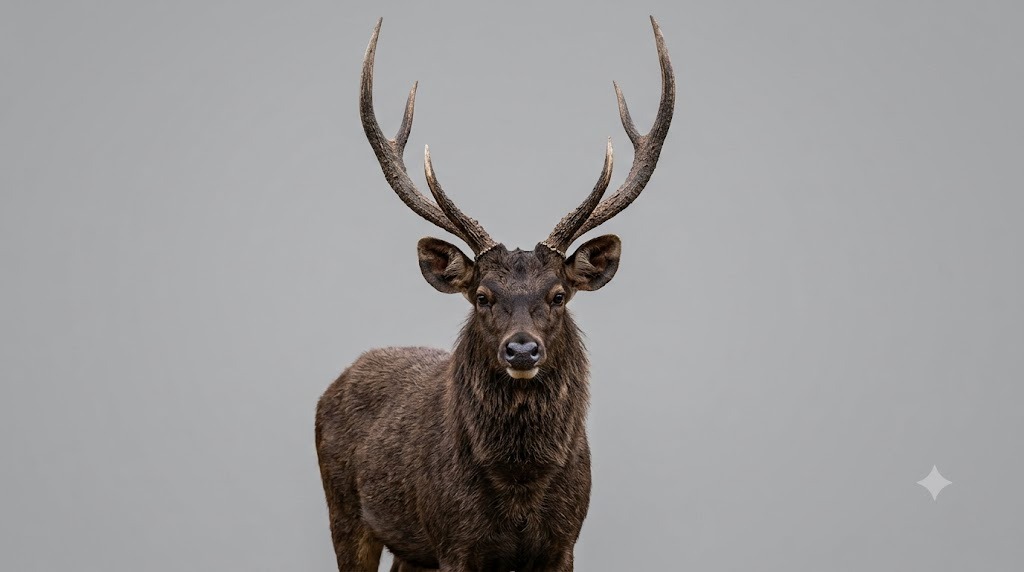
The sambar is a big, dark, powerfully built deer with a shaggy coat that ranges from dark brown to nearly black, often with a rusty or grayish cast. Stags are considerably larger than hinds and develop a thick neck and a coarse mane, especially in the cooler months. Adult animals are heavy: large stags can weigh several hundred pounds, putting them among the biggest deer a US hunter can pursue. The antlers are distinctive - typically a rugged three points per side, with a long brow tine and a forked top, carried on tall beams rather than the multi-tined rack of an elk. Sambar also show a patch of slightly lighter hair on the chin and underparts and have large, expressive ears. Hinds are smaller, antlerless, and a touch lighter in color.
Range & Habitat (US)
In the United States, sambar are found on exotic game ranches across the Texas Hill Country and South Texas, with the most notable free-ranging population on and around St. Vincent Island and a long-established herd in parts of coastal and central Texas ranch country. They favor dense cover near water - thick brush, wooded draws, and the edges of marsh or riverine vegetation - and rarely stray far from heavy security cover during daylight. Sambar are strongly tied to water and are excellent swimmers, often using wetlands and dense bottoms as refuge. Where they occur on ranches, they gravitate to the thickest, least-disturbed parts of the property, making them harder to pattern than open-country exotics.
Behavior & Sign
Sambar are notably wary and largely nocturnal, especially older stags, which spend daylight hours bedded deep in cover and emerge to feed after dark. They tend to be solitary or live in small groups, with stags often alone outside the breeding period. A hallmark behavior is wallowing: stags work mud wallows hard during the rut, coating themselves in mud and thrashing nearby vegetation, which leaves obvious sign. Other sign includes large deer tracks near water, heavily browsed brush, droppings, and rubbed and broken saplings where stags have worked their antlers. Sambar are also vocal, and a startled animal may give a loud, ringing alarm call. Their preference for thick cover and low-light activity makes reading sign around water and bedding areas essential to locating them.
Hunting Seasons & Timing
As a non-native exotic on Texas private land, sambar generally may be hunted year-round with a valid Texas hunting license and landowner permission, with no fixed state season. The free-ranging Florida population on St. Vincent Island is managed under a limited, permit-only special hunt rather than open seasons. In practice, the cooler months from fall into winter are the most productive and comfortable time to hunt sambar: stags are more active during the rut, their coats and manes are at their best, and lower temperatures aid meat care. Because sambar are so nocturnal, hunters concentrate effort in the narrow windows of legal light at dawn and dusk. Always confirm current license rules and, for any managed public hunt, the specific permit requirements before you go.
Hunting Methods
Because sambar bed in heavy cover and move mostly at night, the most effective approach is to hunt the edges of their security cover during the first and last light of day. Glassing feeding areas, wallows, and trails to water from a quiet vantage point, then making a careful stalk, accounts for many sambar. Sitting in ambush near a well-used wallow or a feeding edge during the rut can be highly effective, as stags return to work their wallows. Still-hunting slowly through wooded bottoms suits hunters comfortable in thick country, though the sambar's keen senses make this difficult. Whatever the method, scent control and patience are paramount, because a sambar that detects danger will melt back into cover and turn fully nocturnal.
Where to Find Them - Reading the Terrain
Start at water. Sambar are tied to wet country, so wallows, water edges, and the trails feeding them are the heart of sambar terrain. From there, identify the thickest, most secure cover - brushy bottoms, wooded draws, and dense thickets - where stags bed through the day. Hunt the seams between that bedding cover and the feeding areas, focusing on the brief windows when animals move in daylight. Fresh wallows, large tracks, broken saplings, and heavy droppings mark active country. During the rut, a worked wallow with churned mud and thrashed vegetation is a prime ambush. Position with the wind in your favor and stay still and quiet, because these deer rely heavily on scent and hearing.
Gear & Optics Needed
Sambar are big animals often hunted in low light at the edges of thick cover, so light-gathering optics are a priority. A quality binocular with good low-light performance helps you find animals in the dim minutes of dawn and dusk, and a rangefinder steadies your shot. Bring an adequate rifle: sambar are heavy, well-muscled deer, and a cartridge in the .270 to .30 caliber class or larger, loaded with a tough bullet, ensures clean penetration. Quiet clothing suited to the cover, sturdy boots for wet and brushy ground, and rigorous scent control round out the kit. Because hunts often hinge on a single fleeting opportunity at last light, a steady rest such as shooting sticks and a clear, bright scope are well worth carrying.
Shot Placement & Field-Dressing
A clean, ethical harvest on such a large, tough deer depends on good shot placement. The broadside shot to the heart-lung area, tight behind the front shoulder and into the lower third of the chest, offers the best margin, and breaking the shoulder helps anchor a heavy stag that might otherwise reach thick cover. Wait for a calm, well-ranged, unobstructed shot and pass anything marginal, especially in low light. After the shot, give the animal time, then track carefully. Field care is demanding given the animal's size: a mature stag yields a great deal of meat that must be skinned, quartered, and cooled quickly, particularly in warm Texas conditions. Keep the meat clean, get it cooling fast, and follow local carcass and disease regulations.
Meat & Eating Quality
Sambar venison is dark, rich, and well regarded, with a flavor fuller than that of small deer but clean and excellent when handled properly. As with all wild game, eating quality depends far more on field care than on the animal: rapid cooling, clean handling, and appropriate aging make the difference. The tender loin and backstrap cuts shine with quick, high-heat cooking, while the large hindquarter muscles are superb for roasts, braises, and grind. Given the sambar's size, a single stag provides a substantial amount of red meat, making it both a worthy trophy and a generous source of table fare for the hunter willing to put in the work.
Common Mistakes
The most common mistake with sambar is hunting in the wrong light - because the animals are so nocturnal, hunters who are not in position at the very edges of legal light often never see a mature stag. Underestimating the deer's wariness is another error; sambar bust easily on scent and sound and will vanish for days. Using too light a rifle on such a heavy animal leads to poor penetration and lost game. Hunters also frequently overlook the importance of water and wallows, hunting away from the sign that matters most. Finally, neglecting fast, thorough meat care on a large carcass in warm weather can ruin an otherwise successful hunt.
Regulations & Conservation Note
As a non-native exotic, sambar in Texas are managed under private-land authority rather than a fixed state season, while the free-ranging Florida herd is controlled through carefully limited permit hunts to keep the population in balance with sensitive habitat. In both cases, regulated hunting plays a role in management, and on Texas ranches the value placed on sambar supports broader habitat and wildlife stewardship. Responsible hunters apply fair-chase ethics, take only clean shots, fully use the meat, and follow all license and permit requirements as well as any carcass-movement or disease rules. Hunting sambar legally and ethically helps keep both ranch herds and managed wild populations healthy.
Best Suited For
The sambar suits the patient, experienced hunter who enjoys matching wits with a wary, nocturnal animal in thick cover and who wants a large, distinctive exotic trophy. It rewards those willing to hunt the narrow windows of legal light, control their scent meticulously, and shoot well with an adequate rifle. Hunters who relish elk-like challenge in deer-sized country, and who do not mind hunting heavy cover near water, will find the sambar deeply satisfying. It is less suited to beginners or to those seeking an easy, open-country hunt, since the sambar's caution and habits demand real woodsmanship.
FAQ
Do I need a special license to hunt sambar in Texas? On private land in Texas, sambar are an exotic species hunted with a valid Texas hunting license and landowner permission, with no fixed state season. The free-ranging Florida population is hunted only through limited special permits, so always confirm the specific rules for where you hunt.
Why are sambar considered hard to hunt? Sambar are extremely wary and largely nocturnal, bedding in thick cover by day and feeding after dark, so opportunities in legal light are brief. Their keen senses and preference for heavy cover make patience and scent control essential.
When is the best time to hunt sambar? The cooler months from fall into winter are ideal, when stags are more active during the rut, their coats are prime, and lower temperatures help with meat care. Hunt the edges of cover at first and last light.
Is sambar meat good to eat? Yes - it is dark, rich, and well regarded, and excellent when cooled quickly and handled cleanly. A large stag also provides a great deal of meat.
What rifle should I use for sambar? A cartridge in roughly the .270 to .30 caliber class or larger, paired with a tough, deep-penetrating bullet, is well suited to such a heavy, well-muscled deer.