Scimitar-horned Oryx
The scimitar-horned oryx is a striking North African antelope that has become one of the great conservation stories of modern wildlife management, and today it offers a remarkable exotic hunt across the ranches of the Texas Hill Country.
🗓️ Last reviewed: June 2026
Overview
The scimitar-horned oryx is a striking North African antelope that has become one of the great conservation stories of modern wildlife management, and today it offers a remarkable exotic hunt across the ranches of the Texas Hill Country. Once roaming the semi-deserts and grasslands at the edge of the Sahara, the species was declared extinct in the wild, surviving only because herds were established on private land - and the large managed populations on Texas exotic ranches now number in the thousands, far exceeding what remained anywhere else. A pale, almost white antelope crowned with long, backward-curving horns shaped like a saber, the scimitar oryx gives the hunter a year-round, no-draw opportunity at a genuinely distinctive animal, with excellent meat and a trophy seen nowhere in native North America. For the hunter who wants something unusual and meaningful, the scimitar-horned oryx is a standout.
Identification & Appearance
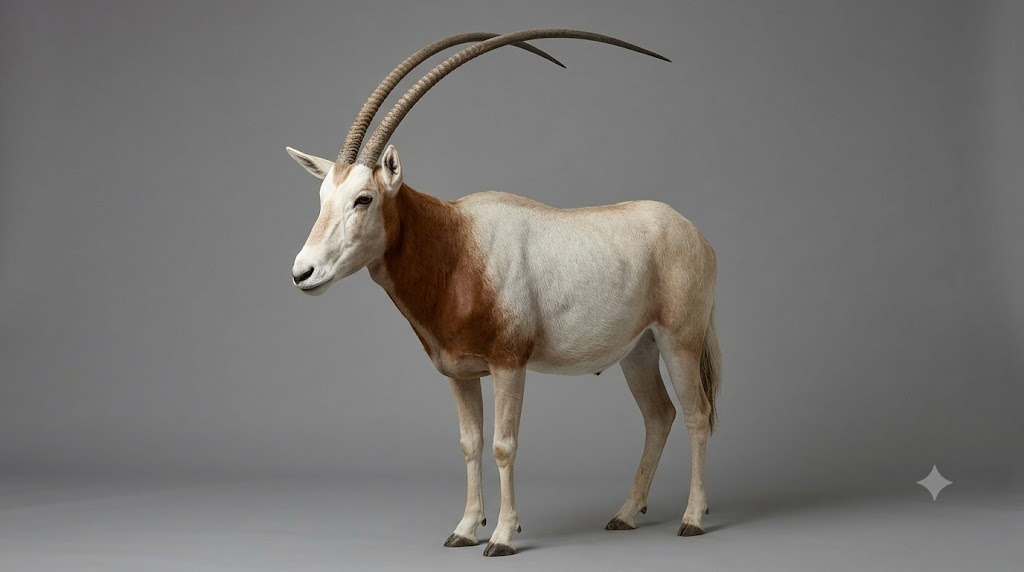
The scimitar-horned oryx is a large, elegant antelope with a build between a horse and a deer and a coloration unlike any native game animal. The coat is predominantly pale, off-white to cream, with a distinctly russet or chestnut neck and chest, faint reddish markings on the face, and a long tufted tail. The species' signature feature is its horns: long, slender, and ringed, sweeping back over the shoulders in a smooth, dramatic curve like the blade of a scimitar, carried by both bulls and cows. Telling the sexes apart takes a careful eye because both are horned - cows' horns tend to be longer and more slender, while bulls' are heavier and thicker at the base, and bulls are generally more robust through the neck and shoulders. Mature animals are sizable, with adults commonly weighing a few hundred pounds. The pale coat, russet neck, and long curving horns make for an unmistakable and beautiful target.
Range & Habitat (US)
In the United States, scimitar-horned oryx are found on private exotic-game ranches, concentrated heavily in the Texas Hill Country and the surrounding ranchland of central and south Texas, with additional herds scattered on ranches elsewhere in the Southwest. They thrive on the open oak savanna, brush country, and grassy rolling hills that define the Hill Country, terrain that echoes the open semi-arid country of their native range. Adapted to heat and dry conditions, oryx range across mixed pasture, cedar and oak cover, and open feeding areas, often on expansive low-fenced or high-fenced properties where the herds are managed for the long term. They favor country with both open ground for feeding and visibility and scattered cover for shade and security. This adaptability, and the deliberate stewardship of Texas ranchers, is exactly what allowed the species to flourish here.
Behavior & Sign
Scimitar-horned oryx are hardy, social, herd animals, alert and wary, with good eyesight well suited to spotting danger across open country. They gather in herds of cows, calves, and younger animals, while mature bulls may run with the group, hold loosely to it, or travel alone. They are most active feeding in the cooler hours of morning and evening, seeking shade during the heat of the day. Like other oryx, a cornered or wounded animal can defend itself with its long horns and should be approached with respect. Sign on the ranch includes tracks on dusty trails and feeding areas, droppings, and well-worn routes between bedding cover, feeders or water, and open pasture. Because they hold to open and semi-open ground, locating oryx is largely a matter of glassing pastures and edges from good vantage points and catching animals as they feed or move.
Hunting Seasons & Timing
Because the scimitar-horned oryx is an exotic on private land in Texas, it is not governed by a public draw or a closed game season - it may generally be hunted year-round with a valid Texas hunting license and landowner permission, with no tag lottery to enter and no application deadline to miss. That makes it one of the most accessible exotic hunts available, open whenever the hunter and the ranch can arrange it. The cooler months from fall into winter are the most comfortable and practical, easing long walks and stalks and, importantly, the care of a large carcass in the Texas heat, while many hunters do pursue oryx successfully in the warmer months as well. Always confirm the specific license requirements, ranch rules, and access arrangements with the property before you go, and plan timing around both comfort and meat care.
Hunting Methods
Free-range spot-and-stalk across open and semi-open ranch country is the defining and most rewarding method for scimitar-horned oryx. On larger low-fenced and high-fenced ranches the animals roam genuinely wild over big pastures, so hunters glass the savanna, brush edges, and open feeding ground from high points or while still-hunting on foot, locate a herd or a lone bull, then plan a careful stalk that uses terrain, cover, and the wind to close on an alert, sharp-eyed animal. Shots may come at moderate to longer range in open country, placing a premium on a steady rest and accurate marksmanship. Because oryx are large, tough, and capable of defending themselves when wounded, hunters should carry adequate firepower, be ready for a follow-up shot, and approach downed animals with caution. Patience, fair-chase discipline, and clean shooting are what make for a good hunt.
Where to Find Them - Reading the Terrain
Glass the open and semi-open ground oryx favor: grassy pastures, oak savanna, brush edges, and the feeding areas and trails where the herds move at first and last light. Look from elevated vantage points for the pale, off-white bodies and russet necks of animals standing out against green or tawny ground, and watch the timber edges where oryx step out to feed in the cool hours. Worn trails, tracks on dusty ground, droppings, and routes between shade, water, and open feed concentrate movement and tell you where animals travel. On big ranch country, expect to cover and glass plenty of ground to locate a herd. Once you find animals, use the scattered cover and the roll of the Hill Country to plan a stalk, keep the wind in your favor, and work into position for a steady, well-ranged shot.
Gear & Optics Needed
Scimitar oryx hunting is a glassing-oriented pursuit over open ranch country, so good optics matter. A quality 10x42 binocular and, on big country, a spotting scope let you locate animals and judge horns at distance, and a rangefinder is valuable for the open shots that come up. Bring a flat-shooting, hard-hitting rifle - cartridges in the .270 to .30 caliber class or larger with a tough, deep-penetrating bullet suit a large, durable animal that may be taken at moderate or longer range. A steady rest such as shooting sticks or a bipod is important. Add sturdy boots for rocky Hill Country terrain, plenty of water and sun protection for the Texas climate, and a solid plan to quarter and cool a few hundred pounds of meat quickly in the heat. Practice from field positions at realistic ranges before the hunt so you can make a clean, confident shot.
Shot Placement & Field-Dressing
A clean, ethical harvest on a large, tough animal like the scimitar oryx depends on precise shot placement and adequate power. The broadside shot to the heart-lung area, tight behind the front shoulder and into the lower third of the chest, gives the best margin, and many hunters favor breaking the shoulder to anchor a heavy bull that might otherwise run far across open pasture. Wait for a calm, well-ranged, unobstructed shot from a steady rest, and be ready to follow up if needed. Approach a downed oryx with caution and from behind, as the long horns are formidable. Field care is demanding in the Texas heat: a mature oryx yields a great deal of meat that must be skinned, quartered, and cooled fast. Work cleanly, keep the meat shaded and ventilated, and follow all ranch handling and game-care practices.
Meat & Eating Quality
Scimitar-horned oryx venison is excellent - lean, fine-grained, mild, and widely regarded as some of the better exotic table fare a hunter can bring home. As with all game, eating quality depends heavily on field care, and the Texas heat makes rapid cooling and clean handling especially important. The tender loin and backstrap shine with quick, high-heat cooking, while the large hindquarter muscles roast, braise, or grind beautifully, and the size of the animal yields an abundance of fine red meat. For the meat hunter, an oryx provides both a memorable trophy and a generous supply of quality venison, fully rewarding the effort of a free-range Hill Country hunt and giving the harvest real purpose at the table.
Common Mistakes
The most common mistake with scimitar oryx is treating an open-country exotic like an easy hunt and underestimating how wary and far-ranging the animals are - hunters who will not glass patiently, cover ground, and shoot accurately often struggle. Bringing too light a rifle on such a large, tough animal leads to lost game, as does misjudging distance in open pasture without a rangefinder. Failing to get a steady rest for the shot is another frequent error. Hunters also sometimes approach a downed or wounded oryx carelessly, risking injury from the long horns. Finally, neglecting to plan for the heat and the volume of meat can spoil a hard-won harvest. Patience, marksmanship, adequate gear, fair-chase ethics, and good meat care all matter on this hunt.
Regulations & Conservation Note
The scimitar-horned oryx occupies a notable place in wildlife conservation: extinct in the wild for decades, the species survives and now thrives largely because private ranches, including the large herds across Texas, gave it land, management, and a reason to be kept and bred - and regulated hunting on those ranches funds the habitat and herds that sustain it. In Texas the animal is hunted as an exotic under landowner authority, with a valid hunting license and ranch permission, rather than through a public season. Responsible hunters apply fair-chase ethics, take only clean shots with adequate equipment, fully use the meat, and follow all license and ranch rules. Hunting scimitar oryx legally and ethically directly supports the ranch herds that pulled this species back from the brink, making it a rare case where the hunter is part of the conservation story.
Best Suited For
The scimitar-horned oryx suits the hunter who wants a distinctive, accessible exotic hunt across open Texas ranch country and who enjoys glassing, stalking, and shooting well from field positions. It rewards patience, careful spotting, disciplined marksmanship, and respect for a large, capable animal, and it offers a genuinely unique free-range trophy, fine meat, and a real conservation connection. With no draw to enter and a year-round opportunity, it is well within reach of working hunters who can arrange access to a good ranch. It is less suited to those seeking a close-cover ambush or a short, effortless outing, but for a hunter chasing something unusual and meaningful - an animal extinct in the wild yet thriving under careful stewardship - the scimitar-horned oryx is hard to beat.
FAQ
Do I need a special permit to hunt scimitar-horned oryx? No draw or special tag is required in Texas. Scimitar oryx are an exotic hunted on private land with a valid Texas hunting license and landowner permission, so there is no lottery to enter and no application deadline. Always confirm the specific license and ranch rules for where you plan to hunt.
Why is the scimitar oryx a notable animal to hunt? It is extinct in the wild, surviving and thriving largely thanks to private ranch herds, including the thousands kept in Texas. Hunting it on those ranches supports the very herds that saved the species, making it a rare hunt with a genuine conservation story behind it.
When is the best time to hunt scimitar oryx? Because it is a year-round exotic in Texas, you can hunt anytime, but the cooler fall and winter months are the most practical, easing long stalks and the care of a large carcass in the heat. Many hunters take oryx in the warmer months as well.
Is scimitar oryx meat good to eat? Yes - it is lean, fine-grained, mild, and regarded as some of the better exotic venison, and a single animal yields a large amount. Fast cooling and clean handling in the Texas heat are essential to quality.
What rifle should I bring for scimitar oryx? A flat-shooting, hard-hitting cartridge in roughly the .270 to .30 caliber class or larger, paired with a tough, deep-penetrating bullet and a steady rest, is well suited to such a large, durable animal that may be taken at moderate or longer range.