Sika Deer
The sika deer is not a true deer of the whitetail mold but a small, dark, elk relative native to East Asia.
🗓️ Last reviewed: July 2026
Overview
The sika deer is not a true deer of the whitetail mold but a small, dark, elk relative native to East Asia. Introduced to a handful of US locations decades ago, the species has carved out a wild, huntable population most famously on Maryland's Eastern Shore, where it thrives in tidal marsh and thick coastal cover. Additional free-range and ranch populations exist in Texas and a few other states. Sika are prized by hunters who want something different: a vocal, secretive, marsh-loving animal that behaves more like an elk than a whitetail and tests woodsmanship in dense, wet, unforgiving country. They are challenging to pattern, hard to see, and deliver some of the best venison in North America. For the hunter who has tagged plenty of whitetails, the sika is a rewarding next step.
Identification & Appearance
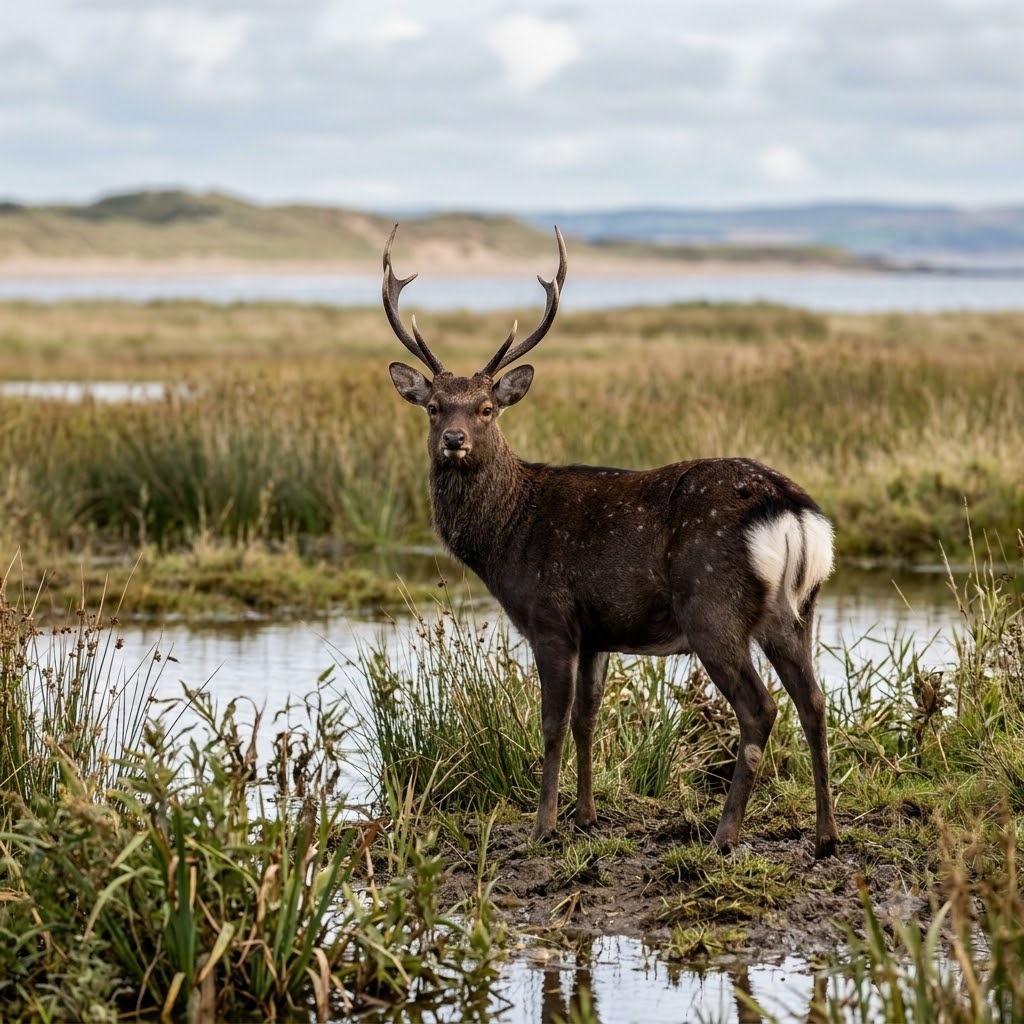
Sika are compact and stocky, standing lower than a whitetail, with dark chestnut-to-nearly-black winter coats. In summer the coat lightens and shows the faint white spotting that betrays their elk lineage. A distinctive feature is the white rump patch, flared and often erected when the animal is alarmed, and a dark dorsal stripe. Stags weigh roughly 90 to 150 pounds; hinds are smaller, often 60 to 90 pounds. Antlers are elk-like in structure but small - typically three to four points per side on a mature stag, rising from a forward-angled beam rather than branching in the vertical whitetail pattern. Listen as much as look: sika are among the most vocal of deer, and their shrill whistling and eerie screams are unmistakable.
Range & Habitat (US)
The stronghold of wild US sika is the tidal marsh country of Maryland's Dorchester and adjoining counties on the Chesapeake's Eastern Shore, with spillover into Virginia. Here they favor phragmites stands, marsh edges, loblolly pine islands, and the thick brushy transitions between water and higher ground. This is wet, dense, low-visibility habitat where a hunter may be within yards of animals and never see them. Beyond the mid-Atlantic, sika are held on Texas free-range and high-fence ranches as an exotic big-game option, and small populations exist in scattered locations. The common denominator is heavy cover: sika love thick, secure, hard-to-hunt ground.
Behavior & Sign
Sika are secretive, largely nocturnal under pressure, and quick to slip into the thickest cover available. They are herd-oriented and highly vocal, especially during their autumn rut, when stags bugle, whistle, and scream to advertise and defend territory. This vocalization is a major asset to hunters, who can locate and even call stags. Sign includes small heart-shaped tracks, droppings, wallows used by rutting stags, and rubs on saplings. Rutting stags also thrash vegetation and mark territory. Because visibility is so poor in marsh cover, reading trails, crossings, and the narrow strips of high ground that funnel movement matters far more than glassing open ground.
Hunting Seasons & Timing
In Maryland, sika share the deer season framework with whitetails, spanning archery, muzzleloader, and firearm segments across autumn into winter. The peak of the sika rut, when stags are most vocal and most vulnerable, generally falls in the second half of autumn and is the single best window to hunt. Early season means patterning feeding movement in and out of marsh; late season concentrates deer on remaining food and secure bedding. On Texas ranches, exotic sika can often be hunted year-round since they fall outside native-game season rules. Always confirm current state and unit dates, bag limits, and any separate sika-specific regulations before the hunt.
Hunting Methods
Ambush hunting from a blind or stand over marsh trails, crossings, and the edges between water and higher ground is the mainstay in the mid-Atlantic. Because sika are so vocal in the rut, calling and locating by sound is a productive and exciting tactic: a hunter can bugle or whistle to strike a stag, then set up along his likely approach. Still-hunting the thick cover is possible but demands wind discipline and slow, quiet movement in wet terrain. On open Texas ranch country, spot-and-stalk works. Boat access is common in the tidal marsh, letting hunters reach remote pockets other hunters cannot. Match method to the density of the cover and the phase of the season.
Where to Find Them - Reading the Terrain
In marsh country, think in terms of high ground and travel. Sika bed in the thickest, driest security cover they can find - phragmites jungles, brushy hummocks, pine islands - and move along the seams between marsh and upland to feed. Find the crossings: narrow necks of solid ground, ditch and creek crossings, and the edges where phragmites meets timber. These pinch points concentrate movement in otherwise trackless cover. Wallows and heavily marked rutting areas reveal stag activity. On ranch terrain, read it like other big game: cover for bedding, food and water, and the corridors between. In all cases, hunt the wind first.
Gear & Optics Needed
Sika hunting rewards gear suited to wet, dense, close-range work. Knee boots or waders are often essential in tidal marsh, and quiet, layered, moisture-shedding clothing keeps a hunter on stand in raw coastal weather. A compact binocular helps pick apart cover, though shots are often close. A rangefinder is useful on the ranch and on any longer marsh sightline. Calls - a sika whistle or bugle - turn the animal's own vocal nature against it. A reliable knife, a headlamp, a mapping app for marking crossings and high ground, and a safety harness for any elevated stand round out the kit. Keep everything low-profile and quiet.
Shot Placement & Field-Dressing
Ethical, fair-chase hunting demands a clean, quick harvest. The broadside shot to the heart-lung area - low and just behind the front shoulder - offers the best margin. Sika are tough, tenacious animals that will bury themselves in the thickest cover when hit, so wait for a calm, well-ranged, unobstructed shot and pass anything marginal. After the shot, give the animal time before pushing into the cover to track. Field-dress promptly to cool the meat, especially in mild coastal conditions, keeping the cavity clean and getting the carcass out and skinned quickly. Wear gloves and follow state regulations on carcass transport and any disease-management rules.
Meat & Eating Quality
Sika venison is widely regarded as among the finest wild red meat in North America - fine-grained, mild, and rich without the strong flavor some associate with other deer. Many marsh hunters rate it above whitetail. As with all game, eating quality depends far more on field care than on the animal: fast cooling, clean handling, and proper aging make the meal. Backstraps and tenderloins shine with quick, high-heat cooking; the hindquarters roast or grind beautifully. A sika is a smaller animal than a whitetail, but the quality of the meat more than compensates and makes the effort of hunting difficult marsh country worthwhile.
Common Mistakes
The most common error is underestimating how thick and unforgiving sika habitat is - hunters used to open woods get frustrated when they cannot see animals that are all around them. Others ignore the wind in swirling marsh thermals, over-pressure limited high ground until sika go fully nocturnal, or fail to use calling during the vocal rut. Pushing too hard into bedding cover educates deer fast. Poor boot and clothing choices end hunts early in wet, cold conditions. And taking rushed shots at animals slipping through brush leads to lost game in cover that is brutally hard to search. Patience and quiet discipline win.
Regulations & Conservation Note
Sika are a non-native species that established a wild, managed population where introduced, most notably in Maryland, where they are hunted under state deer regulations and support a dedicated following. Hunter dollars - through licenses and the federal excise tax on equipment - fund the wildlife management that keeps populations healthy and habitat protected. Buy the proper tags, follow bag limits and any sika-specific rules, report harvests where required, and respect carcass-movement and disease regulations. On exotic ranches, confirm the operation's licensing and fair-chase standards. Hunting within the law and within ethical bounds keeps both the resource and the sport in good standing.
Best Suited For
Sika suit the hunter looking for a genuine challenge and something beyond the familiar whitetail. They reward woodsmanship in thick, wet, low-visibility country, patience on stand, and a willingness to hunt hard for a smaller but superb animal. Those who enjoy calling will love the vocal rut. Marsh and coastal hunters, adventurous travelers heading to Maryland's Eastern Shore, and Texas exotic hunters all find sika worth the effort. It is a species for the hunter who values quality of experience and quality of meat over easy success.
FAQ
Where can I hunt wild sika deer in the US? The premier wild population is on Maryland's Eastern Shore, especially the Dorchester County marsh country, with some spillover into Virginia. Texas ranches also offer sika as an exotic.
Are sika deer related to elk? Yes - sika are more closely related to elk than to whitetails, which shows in their vocal rutting behavior, elk-like antler structure, and faint summer spotting.
Why are sika considered hard to hunt? They live in extremely thick, wet marsh cover, turn nocturnal under pressure, and are secretive and quick to disappear. Poor visibility and difficult terrain make them a genuine challenge.
Is sika venison good to eat? Yes - many hunters rate it among the very best wild meats in North America, fine-grained and mild. As always, quality depends on fast cooling and clean field care.
Can I call sika deer? Yes - sika are highly vocal, especially in the autumn rut, and hunters can locate and call stags with whistles and bugles, making calling one of the most exciting tactics.