Gray Fox
The gray fox is the red fox's quieter, more secretive cousin - a smaller predator of brushy woodlands that offers some of the most exciting close-range calling a hunter can experience.
🗓️ Last reviewed: July 2026
Overview
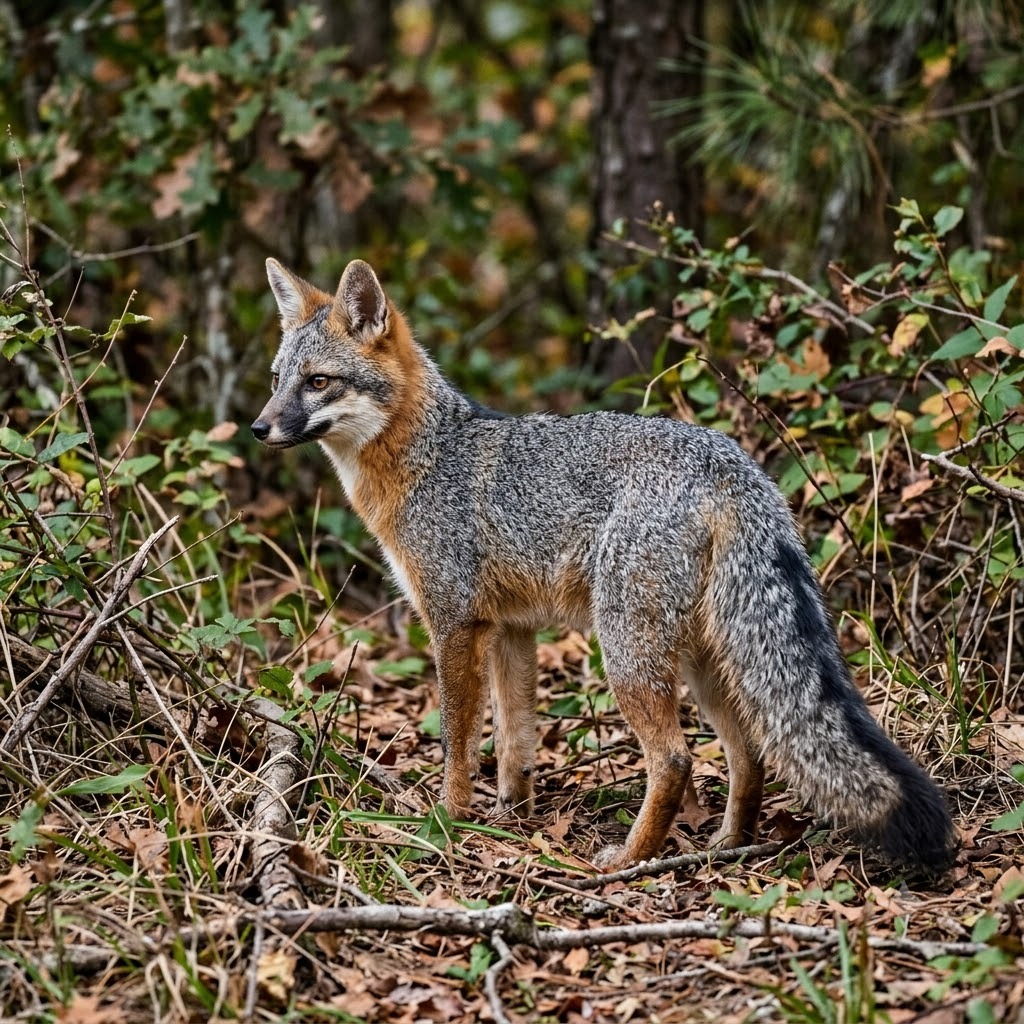
The gray fox is the red fox's quieter, more secretive cousin - a smaller predator of brushy woodlands that offers some of the most exciting close-range calling a hunter can experience. Where the red fox hangs up and circles at a distance, the gray fox often comes fast and close, materializing at the edge of the cover almost before the call fades. Tied to thick timber and tangled brush rather than open fields, and unique among American canines for its ability to climb trees, it rewards hunters who set up tight to cover and stay alert. Its coarser fur is less valuable than the red fox's, but the fast action and close encounters make it a favorite of dedicated predator callers.
Identification & Appearance
The gray fox is a compact, stocky little canine weighing 7 to 13 pounds, shorter-legged and heavier-built than the red fox. Its coat is a grizzled salt-and-pepper gray over the back, with rusty-red patches on the neck, chest, legs, and the sides of the face, and a white throat and belly. The clinching field marks are on the tail: a coarse mane of stiff hair along the top and a distinctive black tip - not the white tip of a red fox. The face is shorter and more cat-like, and the legs carry a reddish wash rather than black stockings. The coat overall is coarser and less plush than the red fox's prime fur.
Range & Habitat (US)
The gray fox is found across most of the United States, especially the South, East, and West, favoring wooded and brushy country far more than the open farmland the red fox prefers. Its classic habitat is a mosaic of hardwood and mixed forest, brushy draws, thickets, swamp edges, chaparral, and rocky, broken terrain - anywhere thick cover is close at hand. Where the two overlap, the gray tends to hold the timber and dense brush while the red works the open edges. A gray fox is rarely far from a thicket to bolt into, so the hunter must set up tight against that cover.
Behavior & Sign
Gray foxes are largely nocturnal and secretive, hunting from dusk through the night for rabbits, rodents, birds, insects, and a good deal of fruit, making them more omnivorous than the red fox. Their signature trait is arboreal skill: alone among American canines, the gray fox readily climbs trees, using curved claws to escape danger or reach food. When called, they tend to respond quickly and directly through cover rather than circling wide. Sign includes small dog-like tracks, twisted droppings often containing fur, seeds, and insect parts, and trails through brush and along cover edges.
Hunting Seasons & Timing
Gray fox hunting is primarily a fall-and-winter pursuit, timed to prime fur and cold-weather activity, though seasons and rules vary widely from state to state. Some states manage the gray fox as a furbearer with defined seasons and licenses, while others are more open, so confirm your local dates, limits, and legal methods before hunting. Within the season, night and the low-light hours around dusk and dawn are most productive, since the gray fox is strongly nocturnal. Cold, calm, dark nights, where night hunting is legal, bring the best action. As always, check your state's rules on hours, lights, and calling devices.
Hunting Methods
Calling is the dominant method, and the gray fox's habits make it a thrilling one. Set up tight to the edge of thick cover and use distress sounds - a rabbit-in-distress or rodent squeal - or fox vocalizations to bring a fox charging in, often close and fast. Because grays respond quickly and hold to cover, stands can be shorter than for red fox, and shots are frequently close and brief. Electronic and hand calls both work, and a small motion decoy can hold a fox's attention. Where legal, night hunting with legal lights or night-vision gear is highly effective. The key is setting up snug against the cover the fox will use to approach.
Where to Find Them - Reading the Terrain
Read gray-fox country as thick cover and its edges rather than the open fields that hold red fox. Focus on wooded draws, brushy creek bottoms, thickets, swamp margins, chaparral, and rocky, broken ground - places with dense escape cover and abundant rabbits, rodents, and fruit. Sit tight to the edge of that cover with a shooting lane where a fox will break into the open, because a gray often comes straight through the brush and appears close. Keep the wind in your favor, but expect a more direct approach than a red fox's wide downwind circle. Cover edges, brushy fencerows into timber, and the seams between thickets are prime places to intercept a gray fox.
Gear & Optics Needed
Gray-fox hunting rewards good calls and tight concealment over long-range optics. Carry a hand call, an electronic caller, or both with distress and fox sounds, and consider a small motion decoy for the close, fast encounters typical of the species. Full camouflage for timber and brush, including face and hands, defeats the fox's sharp eyes at close range. Because shots are often close and quick, many hunters favor a shotgun or a fast-handling rifle with a low-magnification optic rather than a long-range setup. Where night hunting is legal, a legal light or night-vision device is essential given the animal's nocturnal habits. Add a comfortable seat and warm layers for cold, dark sits.
Shot Placement & Field-Dressing / Cleaning
Ethical, fair-chase hunting demands a clean, quick harvest. Given the close, fast shots typical of gray fox, a shotgun with appropriate loads is often ideal; with a rifle, aim for the vital chest area behind the shoulder, or the head and neck at close range, and take only a settled, clear shot. If saving the pelt, choose placement and loads that limit hide damage, though the gray fox's coarser fur is less valuable than the red's. Always wear gloves during field dressing and skinning, since foxes can carry rabies, mange, and parasites - never handle an animal that looked or acted sick, and wash hands and tools thoroughly afterward. Cool the animal promptly and dispose of any carcass legally.
Meat & Eating Quality
The gray fox is not a table animal and is not hunted for meat - it is pursued as a predator and furbearer, and for the sport of the close-range calling. Its coarser coat is less prized than the red fox's plush winter pelt, but hunters who keep the fur should still focus on clean shot placement and careful skinning. If the pelt is not kept, dispose of the carcass legally and responsibly.
Common Mistakes
The most common gray-fox mistake is setting up too far from cover: because grays hold tight to thick country and come in fast, a stand out in the open often means the fox never commits or appears where you cannot shoot. Hunters used to red fox sometimes expect a wide downwind circle and are caught off guard by a gray's quick, direct approach. Other errors include calling too long, moving when a close fox is already watching, and using a long-range setup ill-suited to snap shots in brush. Neglecting the wind, poor concealment, and handling a fox bare-handed round out the pitfalls. Tight setups, readiness for close action, and discipline cure most of them.
Regulations & Conservation Note
Gray fox are common across much of their range and are managed as furbearers in many states, but regulations vary considerably - some set defined seasons and licenses, others are more open, and rules on night hunting, lights, and calling devices differ widely. Always confirm your local seasons, limits, and legal methods before hunting, and follow fur-taker and reporting requirements where they apply. Respect private land and hunt safely, especially at night. Predator hunting can play a legitimate role in wildlife management when done legally and ethically. Following the rules and handling harvested foxes responsibly keeps the pursuit sustainable.
Best Suited For
The gray fox suits hunters who love close-range, fast-action calling and enjoy working thick, brushy cover rather than glassing open ground. It rewards those who set up tight, stay ready for a sudden appearance, and shoot quickly and cleanly - skills that make it an exciting complement to red-fox hunting. Because grays are strongly nocturnal, it especially appeals to hunters who enjoy night calling where it is legal. It is a fine pursuit for the predator caller who values the thrill of the encounter over fur value.
FAQ
How is hunting gray fox different from red fox? Gray fox hold to thick cover and typically come in fast and close rather than circling wide downwind. Set up tighter to the brush, keep stands shorter, and be ready for a quick, close shot.
Can gray foxes really climb trees? Yes - the gray fox is the only American canine that regularly climbs trees, using curved claws to escape danger or reach food. It is a trait that sets it apart from the red fox.
What is the best call for gray fox? Prey-in-distress sounds such as a rabbit or rodent squeal are the standard, and fox vocalizations can also work. Grays often respond quickly, so stay ready for a close, fast approach.
Is gray fox fur valuable? The gray fox's coat is coarser and generally less valuable than the red fox's plush winter pelt. Many hunters still save it, but the gray fox is pursued mostly for the sport of the calling.
Do I need to worry about disease handling a gray fox? Yes. Like all foxes, gray fox can carry rabies, mange, and parasites, so always wear gloves, never handle an animal that looked or acted sick, and wash hands and tools thoroughly afterward.