Virginia Opossum
The Virginia opossum is North America's only native marsupial and one of the more unusual animals a hunter can pursue.
🗓️ Last reviewed: July 2026
Overview
The Virginia opossum is North America's only native marsupial and one of the more unusual animals a hunter can pursue. Slow-moving, nocturnal, and endlessly adaptable, the opossum has never carried the prestige of deer or turkey, and honestly it never will. Its place in hunting tradition is regional and historical, tied to the old Southern "coon-and-possum" nights when hound owners turned dogs loose after dark and followed the music through the woods. Today it is a niche pursuit, chased mostly by houndsmen keeping a tradition alive, by trappers running fur lines, and by landowners managing a nuisance around barns and coops. For a curious beginner it offers a low-pressure introduction to night hunting and hound work.
Identification & Appearance
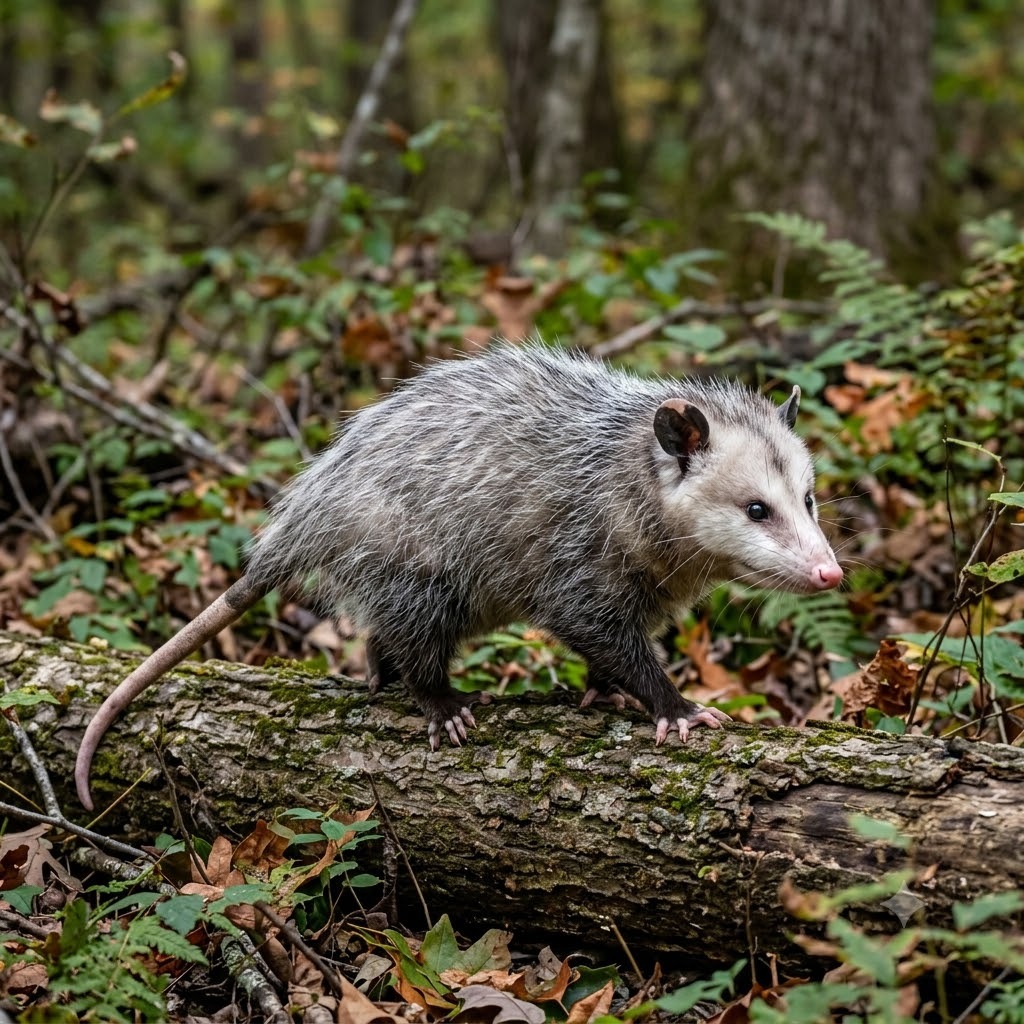
The Virginia opossum is a cat-sized marsupial, typically 4-14 pounds and 24-40 inches long including the tail. Its coarse grayish-white fur, pointed pink nose, black leathery ears, and long naked prehensile tail make it unmistakable. The white face carries dark, beady eyes that shine dull orange in a spotlight. Opossums have fifty teeth - more than any other North American land mammal - and a mouthful of them is the classic defensive display. Females carry a fur-lined pouch where the tiny young develop, a reminder that this is a true marsupial and not a rodent. Opposable "thumbs" on the hind feet give distinctive hand-like tracks.
Range & Habitat (US)
The Virginia opossum ranges across the entire eastern United States, throughout the South, up into the Midwest and Northeast, and along the West Coast where it was introduced generations ago. It is absent mostly from the driest interior West and the far north, though its range keeps creeping northward. Opossums are habitat generalists that thrive near people, favoring bottomland woods, brushy creek edges, farm woodlots, and the fringes of towns. Hollow logs, brush piles, culverts, abandoned burrows, and outbuildings all serve as dens. Wherever there is cover, water, and easy food, the opossum makes a living.
Behavior & Sign
Opossums are strictly nocturnal, solitary, and slow. Not built to run, their defense is to hiss, drool, bare those fifty teeth, and, when truly overwhelmed, to "play possum" in an involuntary faint. They are opportunistic omnivores that eat carrion, insects, fruit, eggs, small animals, and garbage. Sign includes hand-like five-toed tracks with the splayed hind thumb, small dark droppings, and disturbed carrion or raided feed along the creek bottoms and fence lines they follow on their nightly rounds. Because they are so tied to scent trails and easy food, a good hound picks up their track readily, and a spotlight often catches the dull eyeshine of a slow animal in no hurry to flee.
Hunting Seasons & Timing
Opossum is generally classified as a furbearer or nuisance species, and many states allow year-round or very liberal seasons with no bag limit, though this varies widely. The traditional pursuit is a cool-weather, after-dark activity running from fall into winter, when pelts are prime and the nights are comfortable for following hounds, with peak activity the first several hours after full dark. Because rules differ so much - some states regulate it as game, others as unprotected nuisance - confirm your state's classification, season, hours, and license requirements before you go.
Hunting Methods
The classic method is night hunting with hounds, the same tradition as raccoon hunting. Handlers release trailing hounds, follow the trail by ear, and locate the treed or cornered opossum by headlamp or spotlight. Where hound hunting and spotlighting are legal, a slow walk of creek bottoms and field edges with a good light will also turn up opossums, which rarely bolt. Trapping with foothold or cage traps along travel routes is common and effective for fur and nuisance control. Opossums are typically taken at close range with a .22 rimfire or small-gauge shotgun, and because the animal is slow and often cornered, a clean, well-placed short-range shot is the rule.
Where to Find Them - Reading the Terrain
Focus on the edges. Opossums work the seams between woods and field, following creek bottoms, drainage ditches, fence rows, and brushy hedgerows on their nightly rounds. Water is a magnet - a wooded creek or slough with soft mud for tracks is prime ground. Around farms, check near barns, chicken coops, compost, spilled grain, and old outbuildings, all of which draw opossums looking for an easy meal. Hollow logs, brush piles, and culverts serve as den sites. Fresh carrion or a raided feeder will pull them in from surrounding cover, so any concentrated food source is a good place to start after dark.
Gear & Optics Needed
This is a light, simple hunt. A dependable headlamp and handheld spotlight are the core tools for finding eyeshine and following hounds, and a .22 rimfire or small-gauge shotgun handles the shooting. Sturdy boots for muddy creek bottoms, briar-resistant clothing, and thick gloves are worth having, because handling an opossum - even a dead one - means sharp teeth and claws. Houndsmen add a GPS tracking collar and lead. Optics matter little at close night range, but a good light is everything. A game bag or bucket keeps the animal contained for transport.
Shot Placement & Field-Dressing / Cleaning
Because opossums are slow and usually taken at short range, a clean head or high-chest shot with a .22 or shotgun is standard and humane. Handle the carcass carefully and wear gloves - the teeth and claws are sharp, and opossums can carry parasites and disease. If taken for fur, the animal is skinned and the pelt stretched and dried. If destined for the table, a tradition in parts of the rural South, it is skinned and the fatty carcass parboiled before roasting to render out grease. Cool the carcass quickly, clean your hands and tools thoroughly, and dispose of remains responsibly.
Meat & Eating Quality
Honesty first: the opossum is not prized table fare, and most hunters today do not eat it. Historically it was a real food source in the rural South, usually parboiled to cut the heavy fat and then roasted, sometimes with sweet potatoes in the classic "possum and taters" dish. The meat is dark, greasy, and strongly flavored, an acquired taste that reflects the animal's scavenging diet. Anyone who does eat it should cook it thoroughly for safety. For most modern hunters the pursuit is about tradition, hound work, or nuisance control rather than the meat.
Common Mistakes
The biggest mistake is handling opossums carelessly - those fifty teeth and sharp claws draw blood, and the animals can carry parasites and disease, so gloves and care are essential. Another is assuming the rules are loose everywhere; classification swings from protected furbearer to unprotected nuisance depending on the state, and spotlighting laws vary sharply. Beginners also underestimate the ethics - a slow, cornered animal deserves a clean, close, well-placed shot, not sloppy shooting. Finally, hunting at night without a solid light, proper footwear, and awareness of property lines leads to trouble. Confirm your local regulations before heading out.
Regulations & Conservation Note
Opossum populations are stable to expanding and are in no way threatened. Still, regulations must be respected. Because states treat the opossum so differently - game animal, furbearer, or unprotected nuisance - you must confirm your state's classification, licensing, seasons, and legal methods, especially the rules around spotlighting and night hunting, which are tightly controlled in many places. Use ethical, humane methods, dispose of carcasses responsibly, respect private property and get permission, and follow all night-hunting and light regulations to keep this old tradition on the right side of the law.
Best Suited For
Opossum hunting suits houndsmen who love following dogs on a cool fall night, trappers running fur or nuisance lines, and landowners dealing with a persistent pest around barns and coops. It is a relaxed, low-stakes way for a new hunter to learn night hunting, hound work, and after-dark woodsmanship without the pressure of a prized big-game tag. Anyone drawn to living history and the old rural traditions of the South will find it a genuine, if humble, pursuit.
FAQ
Do I need a dog to hunt opossums? No, but hounds are the traditional method and make it far more engaging. Because opossums are slow and rarely flee, an after-dark walk of creek bottoms and field edges with a good light will also turn them up where that is legal.
Are opossums dangerous to handle? They are not aggressive, but they have fifty sharp teeth and claws and can carry parasites and disease. Always wear gloves, handle the animal carefully, and wash thoroughly afterward.
Is there a season or bag limit? It depends entirely on your state. Many states treat the opossum as a furbearer or unprotected nuisance with liberal or year-round seasons, but some regulate it as game. Always confirm your local rules before hunting.
Do people really eat opossum? Some do, mostly as a rural Southern tradition, and it is usually parboiled to cut the fat and then roasted. Most modern hunters do not eat it, and anyone who does should cook it thoroughly for safety.
Why does an opossum go stiff and look dead? That is the famous "playing possum" response - an involuntary faint triggered by extreme stress. It is a genuine reflex, not a trick the animal chooses, and it can last several minutes.